
After rolling out a budget so lackluster it made a sloth on a Sunday look energetic, the New Day Progressive Liberal Party (PLP) government of The Bahamas found themselves in desperate need of a distraction. Their budget, an exercise in mediocrity, offered concessions on sea moss, fire extinguishers, digital camera parts, and laundry detergent in sheet form. Truly inspiring, if you’re in the market for yawns.
But lo and behold, the PLP found their lifeline—a distraction that could rival a reality TV twist. Enter the headline: “FNM SOLD NIB SHARES.” In a melodramatic reveal worthy of daytime soap operas, Minister of Social Services and Urban Renewal Keith Bell disclosed in Parliament that the Free National Movement (FNM), under Dr. Hubert Minnis, had sold the National Insurance Board’s (NIB) entire portfolio of American stocks. Bell, never one to shy away from drama, described this like he was unveiling the location of the Holy Grail.
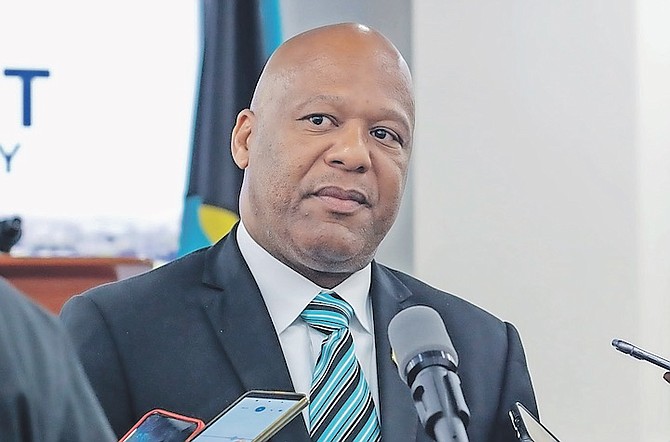
Bell revealed that in 2020, NIB offloaded shares in giants like Apple, Microsoft, Amazon, and Cisco. His shock was palpable, pausing repeatedly during his speech—perhaps to catch his breath from all that theatrical gasping.
But here’s where the story takes a nosedive. Bell’s big revelation, meant to scandalize, fell flat because he conveniently left out the context. He provided just enough to intrigue but not enough to inform. Some might call it lying; we will politely label it as selective storytelling.
Enter Governor Rolle’s remarks from May 2020, which provided much-needed context. The Central Bank was grappling with maintaining foreign reserves and the fixed exchange rate. Tough decisions had to be made, including selling assets to stabilize the economy. The goal was clear—position The Bahamas for a swift recovery once tourism, the economic backbone, bounced back.
The PLP, however, seems more interested in Monday morning quarterbacking than acknowledging the tough decisions made for the greater good. Their narrative, fixated on what the shares might be worth today, misses the crucial point of why they were sold in the first place. It sends a loud and clear message: they would rather harp on hypothetical losses than appreciate the real, tangible gains in economic stability and recovery.
By focusing on the past, the PLP overlooks the essential truth—they’re signaling to the Bahamian people that taking necessary, albeit painful, steps to secure economic relief was a mistake. Their approach? Spectacularly misguided. And so, the PLP fails, as is their nature, to see the forest for the trees. Their nature, it seems, is to miss the point entirely.
END
 My Morning Paper