My Morning Paper 30 December 2024 – Is This The Way that It Ends?

At the start of 2023, the New Day Progressive Liberal Party (PLP) government declared three key priorities: crime, education, and the economy. Yet, as 2024 comes to an end, we Bahamians are left wondering what progress, if any, has been achieved. Prime Minister Philip Davis, leader of the PLP, now claims that his administration’s focus next year will be on making the cost of living more bearable for the average citizen. This belated realization raises an obvious question: when did he recognize that the cost of living had become unbearable?

Was it after implementing an economic plan two years ago that failed to deliver meaningful results? Or perhaps when his government increased fees and imposed additional taxes on already struggling Bahamians? These measures have only deepened financial hardship, making the Prime Minister’s newfound concern appear disingenuous at best and negligent at worst.

Meanwhile, PLP Chairman Fred Mitchell’s recent comments on crime reflect an alarming lack of accountability. Responding to criticism in a Nassau Guardian editorial, Mitchell expressed indignation at claims that the PLP has failed to protect citizens. His rhetorical question—“What more do you expect the government to do?”—comes across as defeatist, if not dismissive.

So which is it; has the PLP given up or do they simply do not care anymore?
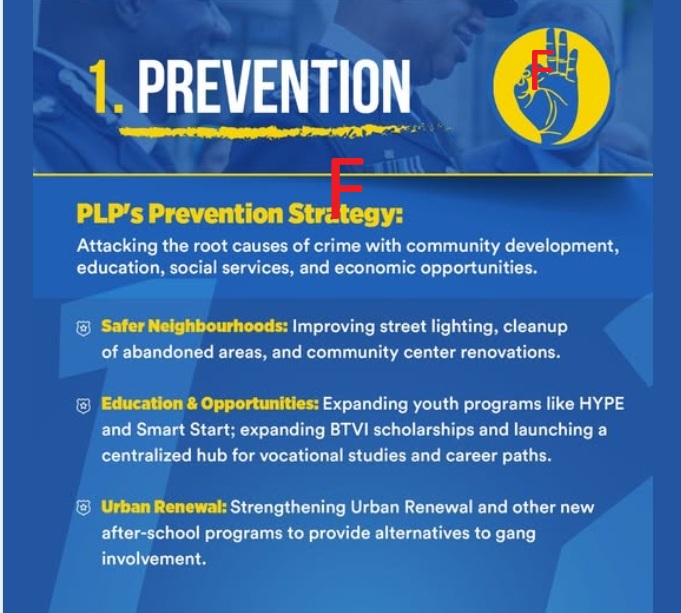
Mitchell’s argument appears to deflect blame for The Bahamas’ crime crisis onto external factors like U.S. drug trafficking and gun manufacturing. While these issues undeniably contribute to the problem, his framing ignores the promises his party made while in opposition, when the PLP heavily criticized the Free National Movement (FNM) government for its inability to address crime. If the PLP believed solutions were possible then, why has it failed to deliver now after three years in office?

Mitchell’s attempt to evoke the legacy of the late Sir Lynden Pindling, referencing his famous remarks on the U.S. drug war during a “Good Morning America” interview, feels like a calculated distraction. Crime in The Bahamas today extends far beyond drug-related violence. The murder rate, armed robberies, and gang violence have all surged under this administration. To pin these issues solely on external forces is both misleading and a disservice to the many Bahamians seeking genuine leadership.

The broader picture is troubling. This administration came to power on a “wave” of promises and lofty rhetoric about being a “New Day” government. However, three years later, there is little evidence of a coherent plan for addressing crime, improving education, or stabilizing the economy. Instead, the PLP appears to be floundering, scrambling to assemble policies while blaming external factors and critics for its own shortcomings, their most favorite “fall-guy” being the Free National Movement (FNM).

As Chairman Mitchell now pleads for another term for the Davis administration so that their crime initiatives can “bear fruit”, he must be reminded that you would have to first “plant the tree”.

Today, the people cannot point to one single piece of legislation implemented by this New Day government that has the intention to progressively mitigate crime.

The Bahamian people deserve better. They deserve leadership that not only acknowledges their struggles but takes decisive and effective action to resolve them. If the PLP seeks a second term, it must show tangible progress—something it has failed to deliver so far. Until then, its repeated promises and rhetorical deflections will ring hollow in the ears of a frustrated nation.

The Progressive Liberal aprty (PLP) fails for one reason, it is their nature.

END
My Morning Paper – December 27,2024 – Political Survival over National Integrity

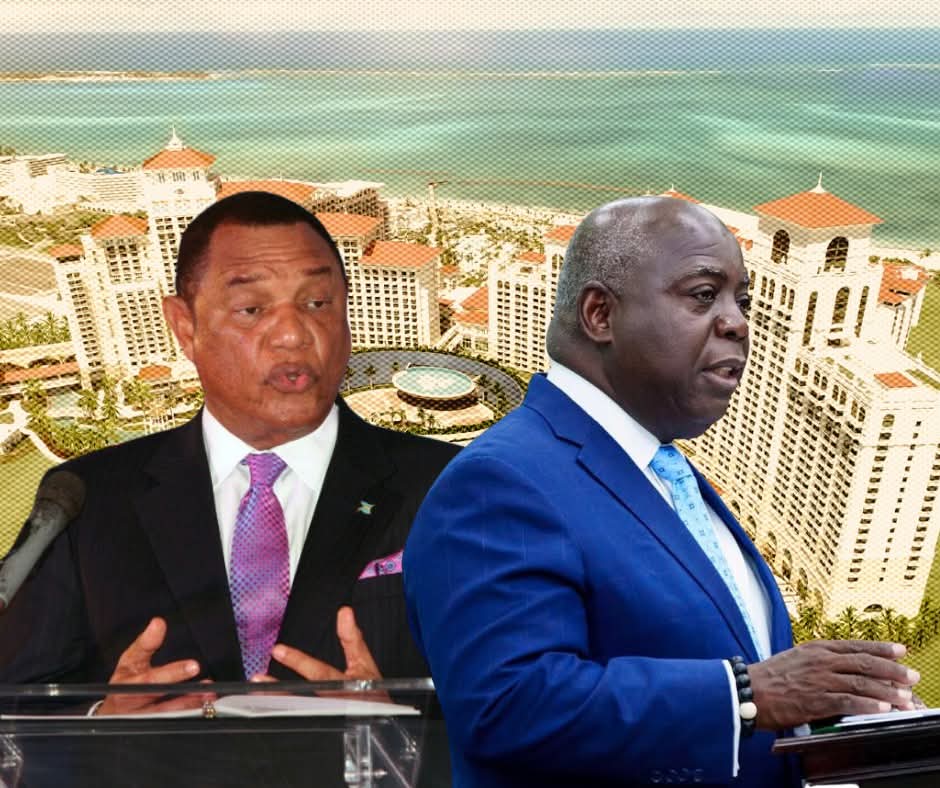
The scenario described highlights significant governance, ethical, and reputational concerns for The Bahamas and its ruling party, the Progressive Liberal Party (PLP).

The issues surrounding Sarkis Izmirlian’s legal victory over China Construction America (CCA), coupled with past allegations of misconduct in the Baha Mar dispute, have placed the PLP government under scrutiny.

First we have an issue of Governance Accountability; The ruling against CCA, particularly the court’s findings about payments to Notarc Management Group to “curry favour” with government officials, raises questions about governance under the previous Christie administration. While the PLP attempts to distance itself from these allegations by claiming no specific person in the New Day PLP government name was called in the court filings, the broader implication is that their governance practices are under fire. Governance in a democratic system demands transparency and accountability. The ruling indicates a failure to safeguard these principles during a critical national project like Baha Mar, which has long been a symbol of economic potential and political contention.

Secondly, we have, despite the millions spent, The PLP’s apparent strategy of attempting to distance itself from the fallout—claiming institutional separation from past administrations—has not resonated well. This approach could be perceived as shirking responsibility, further damaging public trust in the government. The lack of proactive measures, such as initiating an independent inquiry or addressing the reputational risks head-on, gives the impression that the party prioritizes political expediency over national interest.

Then there is the continuing problem of what can only be described as “selective governance”. The fact that the PLP only seems to “realize they are the government at their convenience” speaks to an inconsistent application of authority and responsibility. This inconsistency is emblematic of broader governance challenges, where legal and constitutional obligations are interpreted to suit political ends rather than uphold national integrity.

But we have seen these issues play out before under the Progressive Liberal Party (PLP) government in the Peter Nygard Scandal; where the name of a high-ranking Progressive Liberal Party (PLP) government officials were actually called, being accused of receiving bribes.

The Peter Nygard controversy, which implicated members of the PLP in a web of corruption and misconduct, serves as a cautionary parallel. In both situations, the PLP’s response has centered on deflection and damage control rather than substantive accountability.

Just as the Nygard scandal revealed vulnerabilities in the PLP’s ethical framework, the renewed focus on the Baha Mar dispute exposes enduring issues of governance and integrity within the party.

The recurring themes of deflection, denial, and a lack of proactive accountability strategies are not only detrimental to the PLP but also to The Bahamas’ reputation as a stable and transparent democracy. The implications extend beyond political optics to investor confidence, international relations, and national unity.

They may not only be detrimental to county’ reputation as a stable and democratic country, but they may also have the potential to erode investor confidence. The handling of both Baha Mar and Nygard controversies suggests a governance environment where political connections may outweigh due process/democracy. This perception risks alienating foreign investors and damaging the country’s economic prospects; and the potential to erode our national reputation; The PLP’s failure to adequately address these scandals risks tarnishing The Bahamas’ international image as a well-governed nation. The consequences could be long-term and multifaceted, impacting tourism, diplomacy, and trade.

The PLP government’s approach to the fallout from Sarkis Izmirlian’s court victory and the Baha Mar dispute reflects a broader pattern of governance challenges. The parallels with the Peter Nygard controversy underscore systemic weaknesses in accountability and ethical governance within the party.

For the PLP to regain credibility and demonstrate its commitment to the national interest, it must shift from deflection to accountability. Initiating an independent investigation or Commission of Inquiry into the Baha Mar findings would signal a willingness to confront past mistakes and establish a stronger foundation for ethical governance.

In the absence of such steps, the perception that the PLP prioritizes political survival over national integrity will persist, further eroding public trust and weakening The Bahamas’ democratic institutions. This situation serves as a stark reminder that the political choices of today will define the nation’s trajectory for years to come.

The Progressive Liberal Party (PLP) fails for one reason; it is their nature.

END

My Morning Paper 18 December 2024 – “Hold My Cocktail and Watch This”

Just when you think Fred Mitchell, Chairman of the Progressive Liberal Party (PLP), has reached the zenith of political absurdity, he manages to pull off a dazzling feat of rhetorical contortionism. This time, his target isn’t national issues or substantive policy but a conveniently fabricated grievance against the Free National Movement (FNM) and its former leader and former Prime Minister, the Hon. Dr. Hubert Minnis.

Bravo, Fred—truly, no one plays the “Blame Game Olympics” better then you and the Progressive Liberal Party (PLP).

The Blame Parade: From COVID to AI Conspiracies

Mitchell claims that the former Prime Minister “personally attacked” the current PM, Philip Davis. However, where exactly is this so-called attack? Is it buried under the pile of economic mismanagement and rising crime statistics that the PLP refuses to address? Or perhaps it’s hidden in the skyrocketing electricity bills the Bahamian people have to endure while Eleuthera suffers its very own power woes without any resolution in sight?

Rather than addressing these tangible concerns, Mitchell pivots to a well-worn PLP strategy: misdirection. COVID deaths? Blame Minnis. Corruption allegations? Blame the FNM. A rising tide of crime and despair? Somehow, blame the opposition. Yet, it’s worth noting that Prime Minister Davis has made no meaningful strides in combating these challenges either. Is this what Mitchell considers “a man of the people”?

Fred Mitchell’s indignation over Minnis’s mention of corruption is laughable. The PLP’s resistance to a Commission of Inquiry into allegations involving high-ranking officials reeks of hypocrisy. If this government is so committed to transparency, why is it balking at a legitimate investigation? The PLP’s reluctance to allow sunlight on these matters speaks louder than Mitchell’s bluster.

And now we delve into the bizarre claim of “AI-generated notes.” Mitchell accuses the FNM of fabricating AI-generated narratives to twist his own words. This is rich coming from a party that seems increasingly adept at deploying distractions. Could this statement itself be a pre-emptive excuse for future revelations? The irony here is thicker than the political smog choking our national discourse.

Mitchell concludes by attempting to cast the FNM as violent and criminal—a blatant act of political projection. The real question, however, isn’t what the FNM has done, but what the PLP has failed to do. Rising poverty, spiraling energy costs, and a public service plagued by inefficiency—this is the PLP’s brand under Philip Davis. And yet, Mitchell thinks we should be comforted by the Prime Minister’s “humble heart” and Christmas platitudes. Bahamians aren’t fooled by this empty rhetoric.

So let us be clear:

1. COVID Management: The PLP criticizes Minnis for pandemic deaths but offers no evidence that their approach would have yielded better results.

2. Corruption Inquiry: The FNM has called for transparency through a Commission of Inquiry, but the PLP refuses to engage.

3. Energy Costs: Under the PLP, electricity rates have soared, burdening families and businesses alike.

4. Crime and Safety: The PLP has not demonstrated an effective strategy to curb violence, despite their grandstanding.

Fred Mitchell’s latest tirade serves as a reminder of how far political discourse has fallen under his Chairmanship. Instead of engaging in meaningful debate, he resorts to petty attacks and baseless claims. Bahamians deserve a government that addresses their concerns, not one that deflects blame with the finesse of a schoolyard bully.

So, Mr. Mitchell, the next time you feel the urge to cry foul over the FNM or conjure up AI conspiracies, perhaps take a moment to address the real issues facing our nation. After all, the Bahamas deserves better.

The Progressive Liberal Party (PLP) fails for one reason, it is their nature.

END

My Morning Paper- December 17 2024 – Examining Prime Minister Davis’ Approach to the High Cost of Living Crisis

 If Bahamians are suffering now, why is Prime Minister Philip Davis only looking to unveil his plan to address the high cost of living in 2025, three years into his administration? Is this delay due to sheer incompetence, a lack of having a concrete plan, or a combination of both?

The Nassau Guardian recently reported that Prime Minister Philip Davis, during a Progressive Liberal Party (PLP) St. Barnabas constituency meeting, stated that his government will reveal plans to tackle the high cost of living in the New Year (2025). This announcement comes amidst growing frustration and desperation among Bahamians who have been grappling with high prices, inflation, and the rising cost of basic goods and services.

Excerpt from the article:

“The government will in the New Year divulge more about its plans to tackle the country’s high cost of living,” Prime Minister Philip Davis said.

“He conceded that despite the ‘successes’ of his administration, many people are not ‘feeling it’ because of high prices.”

This acknowledgment—that the “successes” of his government are not translating into tangible relief for citizens—raises critical questions about the administration’s preparedness, prioritization, and policy execution.

Due to the current State of Affairs, the people need assistance now and there is evidence of this growing need daily.

Great Commission Ministries, a prominent local charity, reported a 20 to 25 percent increase in requests for assistance in 2023.

Bishop Walter Hanchell, the organization’s founder, described this as “the worst” he has seen in terms of the growing need among people.

Notably, requests are no longer limited to the poor; members of the middle class are also seeking help due to the rising cost of food, housing, and utilities.

Admits all of this under the New Day Progressive Liberal Party (PLP) administration, budget cuts to social services have exacerbated the struggles of vulnerable families.

With charities like Great Commission Ministries unable to meet rising demand, government support becomes even more critical.

While the government touts ongoing reforms to the electricity sector as a solution to high power bills, these initiatives have yet to yield significant results.

Inflation has further eroded purchasing power, leaving families to struggle with stagnant wages and rising costs for essentials.

The PLP government has been in office for three years. During this time:

Minimal tangible measures have been implemented to provide immediate relief to struggling households.

The announcement of a plan for 2025 seems out of touch with the urgent needs of the population. If solutions were being actively developed, why wait until the next year to announce them?

The question of the day is now, is this due to incompetence or Lack of a Plan?

The government’s delayed response to the cost-of-living crisis suggests two possible explanations:

Lack of Preparedness; The PLP may have come into office without a clear or executable strategy to address inflation and rising living costs.

The delay in unveiling a plan could indicate a failure to prioritize the issue or mobilize the necessary resources in a timely manner.

Administrative Incompetence; If plans exist but have not been implemented, it raises questions about the government’s efficiency and competence in managing critical national issues.

The reliance on future promises rather than current action creates the perception of a reactive rather than proactive administration.

Prime Minister Davis has previously invoked the principle of helping one’s neighbor in times of need:

“If your brother does not have a cloak, give him yours.”

This moral imperative underscores the responsibility of the government to act with urgency. Delaying relief until 2025 contradicts the pressing reality that many Bahamians face today.

The failure of the PLP government to address the high cost of living over the past three years reflects either a lack of foresight or administrative inefficiency. While Prime Minister Davis highlights successes such as low unemployment and education programs, these achievements ring hollow for citizens who struggle to make ends meet. The growing reliance on charities like Great Commission Ministries signals a deepening crisis that demands immediate, not deferred, action.

If relief is only promised for 2025, then it is reasonable to conclude that the government either lacked a plan to begin with or has been slow to implement one. In either case, the cost is being borne by the Bahamian people who need help now—not in the distant future.

Supporting Documentation:

“Plans to reduce cost of living will be revealed in New Year, PM says” – The Nassau Guardian

“A growing need for assistance” – The Nassau Guardian (Bishop Walter Hanchell’s report on increased demands for aid).

The government must shift from promises to immediate action to meet the needs of its citizens, aligning rhetoric with tangible relief measures.

END

My Morning Paper – December 16, 2024 – The Flip-Flop on Commissions of Inquiry -The Convenience of Mistruths: Prime Minister Philip Davis K.C.

In an extraordinary display of political maneuvering, Prime Minister Philip E. Davis, K.C., has executed what many are calling a dramatic reversal on his once-enthusiastic stance regarding commissions of inquiry. While in opposition, Davis fervently advocated for commissions of inquiry as a mechanism to expose the truth, promising their establishment upon taking office. However, nearly three years into his administration, not a single such inquiry has been convened, with Davis now dismissing them as “too expensive.” This shift raises questions about his motivations and the possible convenience of abandoning what was once a cornerstone of his political rhetoric.

 Davis’s Promises in Opposition: Bold Words, Little Action

1. Calls for Accountability in Hurricane Dorian’s Aftermath (2020) 

   In June 2020, then-Opposition Leader Davis called for a commission of inquiry into the Minnis administration’s handling of Hurricane Dorian. 

 “I think we need an inquiry that is wider than this mandate (of a coroner’s inquest) as to what preparation was made in the pre-hurricane, what happened during the hurricane, and the post-hurricane recovery efforts,”; Davis declared, emphasizing the need for transparency. 

   – The implication was clear: uncovering what went wrong would help avoid future failures.

2. The Fight Against “Unjust Practices” (2019) 

   In December 2019, Davis explicitly promised to establish a commission of inquiry as soon as he came to office. His focus? Alleged misconduct in investigations targeting PLP politicians acquitted of bribery. 

      “As soon as I’m in power, I would establish a commission of inquiry to stamp out unjust practices and hold accountable anyone who was found responsible,” he pledged. 

   This, he said, would “purify the administration of criminal justice.”

3. 2012 Rallying Cry for Inquiry into Ingraham Administration.

 Davis’s history of demanding commissions dates back even further. During a rally in 2012, he vowed to establish a commission to probe the Ingraham administration’s alleged misconduct. 

  “I will give my support to the appointment within our first 100 days in office, a commission of inquiry to investigate the scandalous episodes of misconduct by the outgoing administration.”_

The Reversal: Too Expensive, Too Convenient?

Fast-forward to 2024, and the once-fiery advocate for commissions of inquiry has cooled significantly. Prime Minister Davis now dismisses such probes as prohibitively expensive. 

“We’ve examined the commission of inquiries, and it is an extremely expensive exercise. At this time, we don’t have the resources to spend on such an inquiry. Our resources [are] needed to deal with [the] challenges of our people.”_

This stark contrast between his former rhetoric and current position is striking, especially given his previous advocacy during financially challenging times, such as 2020 when the country’s coffers were under similar strain.

Political Convenience or Genuine Concern?

Is Prime Minister Philip Davis latest actions simply hypocrisy in action? 

Davis’s change of heart coincides with allegations of corruption within the police and defense forces. Critics argue that his newfound reluctance conveniently shields his administration from potential fallout. 

A commission of inquiry might shine an uncomfortable spotlight on key government figures, a risk Davis appears unwilling to take. 

The argument that inquiries are “too expensive” rings hollow to many. These commissions, proponents argue, serve as essential tools for transparency, justice, and the prevention of future misconduct. 

Supporting Documentation: A Timeline of Contradictions 

 Date                                 Event                                   Davis’s Position           

 April 2012      – Called for inquiry into Ingraham administration’s actions    – “Support within 100 days in office.”                                                      

December 2019   – Pledged inquiry into unjust investigations targeting PLPs     – “As soon as I’m in power, I would establish a commission of inquiry.”                      

June 2020       – Demanded inquiry into Hurricane Dorian response             –           “You need a holistic investigation of what went on and what went wrong.”                 

December 2023   – Declined calls for inquiry into police and defense forces   – “Extremely expensive exercise… Resources [are] needed to deal with [the] challenges.”

Prime Minister Philip Davis K.C.’s handling of the commission of inquiry issue is a textbook case of political expediency and can only be seen as a master class in political convenience. While he once championed these probes as critical tools for justice and accountability, his refusal to act now suggests a calculated effort to avoid scrutiny. The shift from bold promises to dismissive excuses not only undermines his credibility but also raises serious questions about his administration’s commitment to transparency.

Will the Bahamian people accept this reversal, or will they demand the accountability Davis once promised?

The Progressive Liberal Party fails for one reason, it is within their nature.

END

My Morning Paper – December 12, 2024 – Still a Matter of Trust – A Day Of Reckoning II

“It’s a matter of trust” was once the rallying cry of the Free National Movement (FNM). Today, that slogan finds new resonance as former Prime Minister Dr. Hubert Minnis challenges the New Day Progressive Liberal Party (PLP) government’s commitment to transparency and accountability.

Yesterday, Dr. Minnis made headlines with a damning critique:

“Minnis: Independent Commission of Investigation Bill ‘a waste of time’” – The Tribune, December 6, 2024

“When I was Prime Minister, there was an indictment coming down, and I was informed. This time, an indictment came down and they said they were not informed. So, I’m saying if they were not informed, then either the Americans did not trust them, or they’re not telling us the truth because I was informed, or they themselves are part of the investigation that’s going on. And if it’s not them, its immediate family members or close friends, and therefore, you couldn’t tell them. These are possibilities.”

The indictment in question concerns allegations of corruption within The Bahamas’ police and defense forces—a betrayal of public trust and a damning international spotlight on the country’s governance.

In response, Prime Minister Philip Brave Davis dismissed calls for a commission of inquiry:

“PM says commission of inquiry would be too expensive” – The Nassau Guardian

“Prime Minister Philip Brave Davis said yesterday the government has decided against calling a commission of inquiry because it is too expensive.

“We’ve examined the commission of inquiries and it is an extremely expensive exercise, and at this time, we don’t have the resources to spend on such an inquiry,” Davis said following the House of Assembly. “Our resources [are] needed to deal with [the] challenges of our people, and that is where we are focused right now.”

But here’s the contradiction: Just weeks ago, Davis declared a commitment to strengthening oversight of law enforcement. Following the unsealing of the U.S. indictment, he proclaimed:

“We are going to use every resource – and consider every option – so that Bahamians can trust those who take an oath to protect them.”

Every resource except, apparently, a commission of inquiry. This contradiction has not gone unnoticed by critics who question the sincerity of the PLP’s promise for accountability and transparency.

Let’s not forget the infamous statement by Fred Mitchell, Minister for Foreign Affairs and Chairman of the New Day PLP:

“We [The Progressive Liberal Party] oppose this Freedom of Information Act… The Fiscal Responsibility Act, The Procurement Act and a Freedom of Information Act. All of these things really have nothing to do with people’s ordinary lives. Freedom of Information? I don’t think so. It’s bureaucratic, expensive to execute.”

This aversion to progressive measures seems to permeate the PLP’s governance. Whether it’s the Freedom of Information Act, fiscal transparency laws, or now a commission of inquiry, the consistent refrain is “it’s too expensive.”

But at what cost does this reluctance come? The cost of trust.

The Progressive Liberal Party—whose very name suggests a commitment to progress and reform—now stands accused of stalling the very mechanisms that could restore faith in government. The contrast between their rhetoric and actions is stark. How can a government claim to prioritize trust and transparency while dismissing every opportunity to prove it?

In the court of public opinion, the PLP’s arguments about expense and bureaucracy sound increasingly hollow. Bahamians are left to wonder: Is it truly a matter of cost, or is it a matter of fear? Fear of what might be uncovered? Fear of what transparency might reveal?

Dr. Minnis’ parting intimated deserves reflection;

“If it’s not them, its immediate family members or close friends, and therefore, you couldn’t tell them. These are possibilities.”

If even the shadow of these possibilities exists, the New Day government owes it to the people to confront them head-on. Anything less is not just a betrayal of trust but a betrayal of democracy itself.

Bahamians deserve better. And until the PLP demonstrates a true commitment to transparency, it remains—as always—a matter of trust.

END

My Morning Paper – A Day of Reckoning

It would seem that Parliament was convened today for no nobler cause than political theater—a dual-purpose exercise in power projection and holiday convenience. On one hand, we witnessed the calculated suspension of six Free National Movement (FNM) Members of Parliament, whose daring escapade of attempting to remove the ceremonial Mace and toss it out of the window was deemed an “embarrassment” by the powers that be. This act, while chaotic, symbolized a desperate plea for democratic accountability. But accountability is not on the menu in the New Day Progressive Liberal Party (PLP) cafeteria. The suspension is a brazen reminder of who holds the reins—a demonstration of brute force that renders the Speaker of the House little more than a puppet in this farcical production.

On the other hand, Parliament’s timing—just ahead of the Christmas break—is suspect. One might think the urgency would be to tackle critical national issues. But no, it appears the real objective is to clear the stage for the PLP’s next act: the Christmas Carnival. Yes, the same carnival that during their first year caused a national uproar when it mysteriously received approval to operate during a delicate phase of easing COVID-19 restrictions. Back then, no one in the government seemed to know how it was allowed in. Not the Prime Minister, not the Minister of Health, not the Minister of Foreign Affairs. It was only when the Hon. Dr. Hubert Minnis addressed it that the public even learned of this bureaucratic ghost story. Yet here we are again, history seemingly preparing to repeat itself, this time with even more flair.

Curiously, Dr. Minnis himself was the sole FNM member spared the Speaker’s wrath. Coincidence?

Doubtful.

The Nassau Guardian’s recent article “PM: Our Reputation is Being Unfairly Tarnished” offers an intriguing backdrop to this saga. In it, Prime Minister Philip “Brave” Davis laments that a recent U.S. indictment alleging corruption within Bahamian police, defense forces, and government officials is tarnishing the nation’s image. Tarnishing? That’s generous. If anything, this government’s own conduct has provided the tarnish—polished to a shine with every questionable decision and dodgy maneuver.

According to the Prime Minister, he called in the U.S. charge d’affaires for an explanation, only to be told she “didn’t know” about the matter. The Minister of Foreign Affairs then contacted the State Department, which allegedly reassured them that the indictment had “nothing to do with our relationship.” But what does “our relationship” mean here? Is it between the Bahamas and the United States, or something more… personal? And what exactly did the charge d’affaires “not know”? These vague statements raise more questions than answers, but obfuscation seems to be the hallmark of this administration.

Meanwhile, Dr. Minnis wasted no time in pointing out the inconsistencies. Speaking to The Tribune, he noted that during his tenure as Prime Minister, he was informed of an impending U.S. indictment. This time, however, the Davis administration claims ignorance. Minnis posited a troubling theory: either the Americans don’t trust this government, or the government is lying about being informed. Worse still, he suggested that someone within the government—or their close associates—might be implicated in the investigation. These are damning allegations that demand immediate attention, yet it appears we will have to wait until January 15, 2025, when Parliament reconvenes, to see if any light will be shed.

The Nassau Guardian article quotes Davis stating that the U.S. indictment “has nothing to do with our relationship.” But let’s not ignore the irony of this declaration being made at a luncheon with church leaders in Fox Hill. A mid-day prayer meeting might indeed be appropriate given the moral quagmire his administration seems to be wading through. Still, the timing raises eyebrows. Shouldn’t the Prime Minister and his cabinet spend their time addressing these serious allegations instead of offering ambiguous reassurances to clergy over lunch?

What we are left with is a deeply unsettling picture. A government more adept at spinning narratives than addressing substantive issues. A Parliament that prioritizes political vendettas and holiday festivities over governance. And a Prime Minister who seems more concerned with optics than accountability.

As 2024 draws to a close, the PLP faces a moment of reckoning. The events of December 4, 2024, have cast a long shadow, and the questions swirling around this administration’s relationship with the U.S. will not dissipate without clear answers. If the PLP hopes to salvage any credibility, it would do well to spend this Christmas break formulating a strategy—not for damage control, but for truth-telling. Because at this rate, 2025 won’t just start with a bang; it will begin with a reckoning.

The PLP’s fails for one reason, it is their nature.

END
[Farcical means something is so silly or extreme that it is hard to take seriously]

 My Morning Paper – December 10, 2024 – False Impressions and Lies

When a person or group of persons are exposed for alleged wrong-doing; for something that they have gotten away with for quite some time, they often take a strong defensive stance.  They would attempt belittle or intimidate through insults those that are exposing them – this is one of the traits of a bully.

Today, this is what we seem to be facing with the governing New Day Progressive Liberal Party (PLP) government, as they attempt to contort the events that occurred in the House of Assembly last week into some dark and criminal event to suit their version of reality; but if there is one thing that we have learned about the Progressive Liberal Party (PLP), especially this New day version, there is truth and there is PLP truth and the two DO NOT assimilate.

“Pintard: PM painting a false picture over House chaos” – The Nassau Guardian

Excerpt from this article;

“Free National Movement (FNM) Leader Michael Pintard said it is “shameful” that Prime Minister Philip Brave Davis is seeking to paint a false picture about the opposition’s actions in the House of Assembly last week, saying video evidence proves they were not violent.

While speaking at a Progressive Liberal Party (PLP) event in St. Barnabas on Friday, Davis repeated claims that the FNM hatched a plan for the party’s deputy leader, Shanendon Cartwright, to hurl the speaker’s mace out of the House of Assembly’s window.

Davis called the FNM’s leadership “unhinged” and said its members were “violent,” noting that Deputy Speaker Sylvanus Petty and the House of Assembly’s sergeant at arms were injured during the ensuing mayhem.

During an interview with The Nassau Guardian on Sunday, Pintard denied that Cartwright’s actions were a premeditated event.

He said the FNM is deeply ashamed of the behavior of the prime minister and the speaker in the version of the story they told on the incident.

“Both of them sought to sensationalize the events in terms of casting blame on the opposition as if we … were responsible for injuries that they sought to raise concerning the deputy speaker and the sergeant at arms, both of whom we enjoy a cordial, civil relationship with,” Pintard said.”

The Progressive Liberal Party (PLP) as a party and a government is at this very moment attempting to have the Hon. Michael Pintard, the Leader of the Free National Movement (FNM) apologize to the country for the “embarrassing” events of 4th of December 2024, where in an act of frustration at the blatant disrespect to the Opposition of the people of the country, the governing PLP attempted to stifle democracy and shut down the Opposition in the House of Assembly as they tended to the people’s business.

It now appears that the governing party along with it surrogates are suggesting that the Opposition always had the option of simply walking out and turning their backs on the people’s business and acquiescing to the bully tactics of the New days PLP government; what purpose would that have served?

Whose agenda would that have served?

Now these questions can and will be asked of the current manner in which events unfolded and my answer is that at the very least well-meaning persons would be willing to sit down have a conversation about it and the way forward; I say well-meaning person because it has become quite clear that many are not “well ‘meaning” individuals and would rather criticize the events than lift the country up from the events that fomented them; this is how a country truly progresses.

It is indeed a sad state of affairs that instead of accepting their culpability in the events of last week Wednesday, as it is clear that Speaker was very instrumental in sensationalizing the events and unfairly blaming the opposition for the injuries sustained, this New Day instead resorts to attempts to minimalize them, and thereby any future unrest to bring about democracy when the peoples voice is not being heard or simply ignored.

The Progressive Liberal Party fails for one reason, it is within their nature.

END

My Morning Paper – December 09, 2024 – Holding the Progressive Liberal Party Government to Account 

Today I write to speak truth, expose failures, and remind the people of this great nation that we deserve better. 

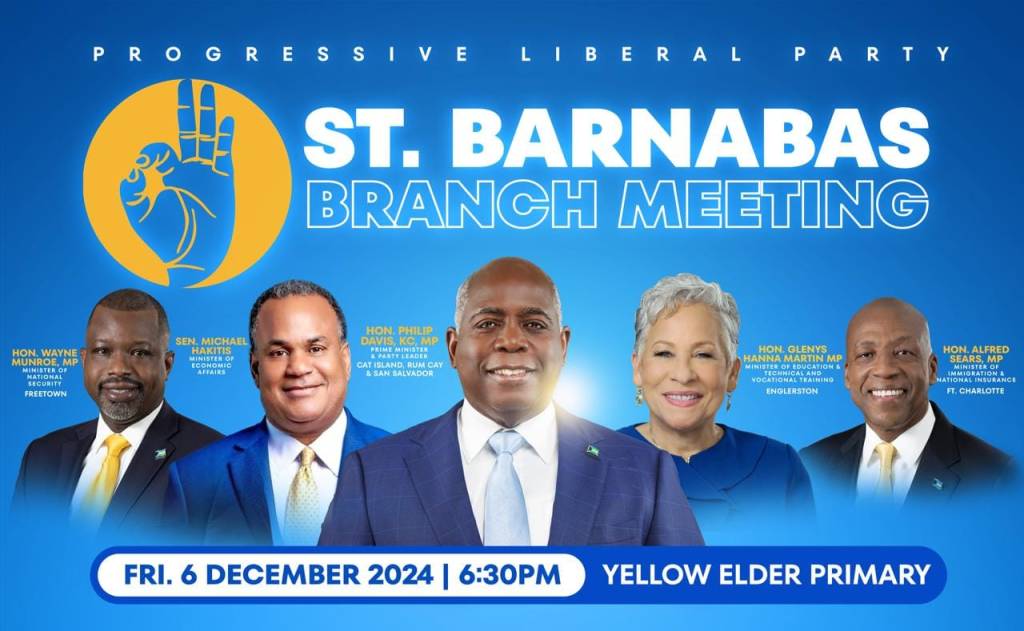
Just this past weekend, the Progressive Liberal Party (PLP) gathered in St. Barnabas in what can only be called a mini-rally, as they brought all the big guns. Now, you would think they would have focused on pressing issues like the rising cost of living, crime or the struggles faced by everyday Bahamians. But no—what did they do? They spent their time painting the Free National Movement (FNM) as “unhinged” and “violent.” 

How does that help the average working man put food on your table?

 How does that reduce his light bill?

How does that get his children a better education? And then, amid the noise and distractions, Prime Minister Philip Davis made yet another promise

“Plans to reduce the cost of living will be revealed in the new year.”   

Does this sound familiar? 

Let me remind you of what he said back in January of this year: 

“Our top three priorities are the economy, education, and crime.” 

Now here we are, nearly a year later, and the promises to reduce the cost of living have been recycled for another time, with no real action taken and you can draw your very own conclusions as to how they did on their other two priorities at the time. 

As if this were not bad enough, just a day or two earlier we had  one of their senators—a man whose name I won’t bother to mention because most Bahamians don’t know it either—decided to defend this government’s failures by attacking Senator Michela Barnett-Ellis for speaking the truth. She called out the PLP for failing to stimulate economic growth, and instead of addressing the issues, this senator delivered a condescending tirade with cherry-picked numbers: 

2017 (PLP’s departure): $12.24 billion GDP 

2020 (FNM’s term): $9.9 billion GDP 

2022 (PLP’s return): $13.14 billion GDP 

2023: $14.43 billion GDP 

Let us take a decent look at this, shall we? This senator conveniently ignored the fact that the 2020 numbers reflect a global pandemic that crippled economies worldwide. The rebound wasn’t because of any PLP magic—it was a natural recovery as borders reopened and commerce resumed. 

And while the PLP pats itself on the back, Bahamians are struggling. Rising costs have eaten away at any so-called “progress” this government claims to have made. The Prime Minister himself admitted,

“Many people are not feeling it.”

So, what has this New Day PLP government done to reduce the cost of living? Nothing. What they have done is promise, delay, and distract. Their strategy seems to be hoping that inflation will cool down naturally so they can claim credit for forces beyond their control.  

As they are trying to do with the economy 

Meanwhile, Bahamians are caught in the middle, simply trying to survive. Families are choosing between paying bills and putting food on the table. Businesses are struggling under the weight of rising costs. And instead of offering solutions, this government is focused on petty politics. 

Ladies and gentlemen, we cannot sit idly by while this government plays games with the future of our country. The PLP has proven time and time again that they are not capable of delivering real progress. Their nature is to fail, and their promises are empty. 

The Free National Movement, under the leadership of Hubert Minnis, laid the groundwork for recovery. The plans and policies that have brought any relief or progress were put in place by the FNM. The record is there for all to see—I dare them to prove me wrong.

It’s time to stop the grandstanding. It’s time to stop the distractions. It’s time to focus on what really matters: reducing the cost of living, creating opportunities, and building a brighter future for every Bahamian. 

The PLP has failed you, but we won’t. Together, we will build a Bahamas where the people—not the politicians—come first.

END

My Morning Paper – December 06, 2024 – Bullying by the PLP’s Playbook

As one listens to the voice note by Fred Mitchell, Chairman of the Progressive Liberal Party (PLP) and Minister of Foreign Affairs, it is unmistakable that the PLP has dusted off its toxic playbook of bullying—a desperate attempt to silence dissent, control its base, and intimidate opponents into a submission of silence The characteristics of bullying—threats, insults, and exclusion—are all on full displayed here, stopping just short of outright threats.

Mitchell’s remarks are riddled with inflammatory language aimed at disparaging those who dare to challenge the PLP. Referring to individuals as “Uncle Toms” is not merely name-calling; it’s an insidious tactic designed to demean, isolate, and publicly shame. By weaponizing this historically loaded term, Mitchell not only insults individuals but also seeks to undermine their credibility and worth.

Then there’s his use of exclusionary language: “All PLPs and people of goodwill.” This phrasing creates a clear divide—you’re either aligned with the PLP, or you’re cast out as lacking “goodwill.” It’s the oldest trick in the bully’s handbook: force conformity by ostracizing those who don’t fall in line. This type of rhetoric stifles open dialogue and reinforces a culture of fear and submission.

A closer look at Mitchell’s tone reveals an unmistakable sense of insecurity. Like most bullies, his bravado masks a deep fear of losing power. By accusing opponents of being “violent, criminal, and unpatriotic,” Mitchell is engaging in classic projection—attributing his party’s divisive tactics to others. His claims that the opposition’s actions undermine the “rule of law” are ironic, given the PLP’s own history of suppressing dissent and fostering discord.

Mitchell’s voice note also attempts to co-opt the narrative of Bahamian history for political gain. He chastises the Free National Movement (FNM) for allegedly mocking a significant moment in the nation’s fight for freedom, yet fails to acknowledge the broader context: the PLP’s refusal to engage in democratic debate is what escalated tensions in the first place. To suggest that dissenting voices are “burning the house down” for power is disingenuous, especially when the PLP’s own actions—such as silencing the opposition—have contributed to this political discord.

Mitchell’s remarks are a textbook example of bullying behavior:

While he stops short of direct threats, his rhetoric is rife with implications that dissenters will face social and political ostracism; Threats and Intimidation.

The use of “Uncle Toms” is a deliberate attempt to insult and demean; Name-Calling.

By framing loyalty to the PLP as synonymous with “goodwill,” Mitchell excludes and isolates those who hold opposing views; The Threat of Exclusion.

Overall, the real tragedy here is the chilling effect such rhetoric has on democratic discourse. Instead of fostering an environment where ideas can be debated and challenged, the PLP’s leadership has chosen to weaponize language to silence critics. This is not the behavior of a party confident in its vision for the Bahamas; it is the behavior of a party desperate to cling to power at any cost.

Perhaps the most glaring irony is Mitchell’s call for “PLPs and people of goodwill” to reject the “violence” and “psychological warfare” of the opposition. This statement is rich coming from someone whose own rhetoric is steeped in psychological manipulation and divisive tactics. If the PLP truly wishes to uphold the values of unity and goodwill, it might start by reevaluating its own approach to political discourse.

The truth of the matter is this; if Mitchell’s voice note attempts to frame the FNM as the instigators of “violence, patriotism, criminality, and discord,” one cannot ignore the underlying truth: had the PLP allowed the opposition the chance to speak and address the matter at hand, this entire debacle could have been avoided. Instead, the PLP’s refusal to engage has only fueled the very discord it decries.

So that lead to me this conclusion; Fred Mitchell’s voice note is more than a partisan rant; it’s a reflection of a broader issue within the PLP’s leadership. Bullying tactics, whether through language or actions, have no place in a democratic society. It’s time for the PLP to step back, reflect, and prioritize dialogue over domination. Only then can they truly claim to act in the “goodwill” of the Bahamian people.

END