
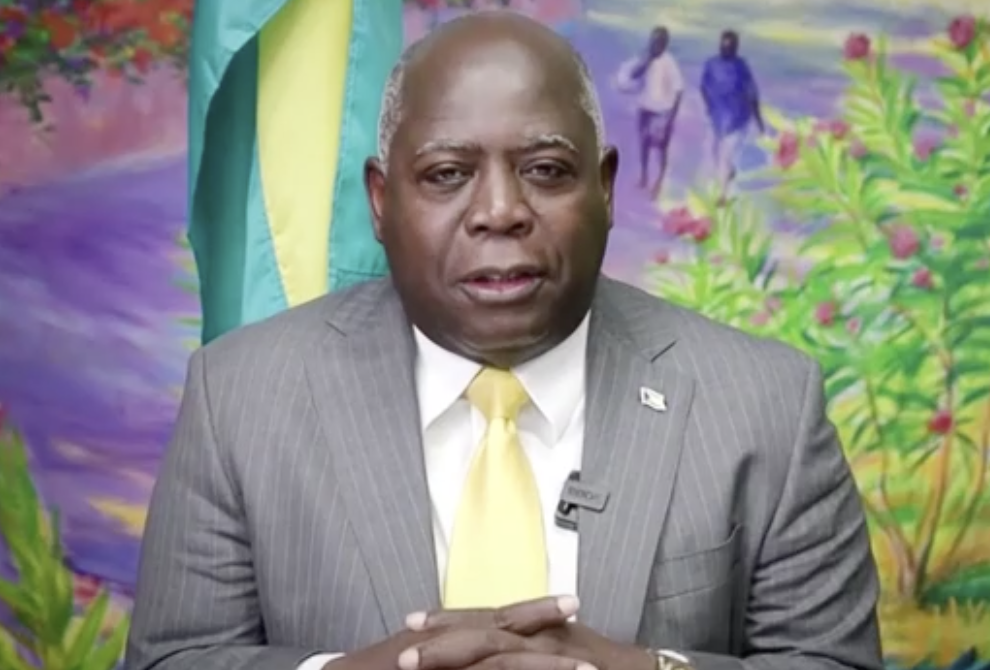
I remember a time—not so very long ago—when Prime Minister Philip “Do It Properly” Davis lectured the nation about order, process, and the sacred necessity of doing things the right way. Shanty towns, we were told, must be demolished carefully, methodically, and above all, properly.
Fast-forward to today, with the election clock ticking louder than a woman’s biological clock at a family reunion, and suddenly all that talk of patience and precision has gone straight out the window. These days, it seems the Prime Minister has abandoned any lingering commitment to “doing things right” in favour of doing things right now—details to be sorted out later, if at all.
This week, even the CEO of the Grand Bahama Power Company (GBPC), Dave McGregor, appeared to politely choke on his morning coffee as he acknowledged the… let’s call it awkwardness of the Prime Minister’s announcement that the government had signed a Memorandum of Understanding (MoU) with Emera Incorporated to “gain control” of GBPC.
Yes—gain control. Minor problem, though: no one seems quite sure who actually has control to give.
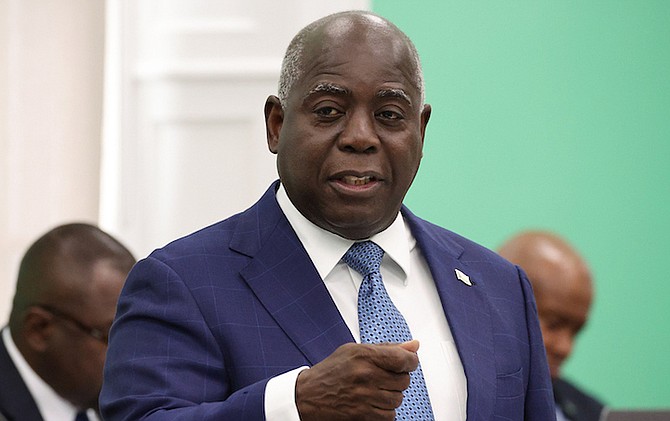
As reported by The Nassau Guardian:
“Emera: No deal yet with govt – GBPC deal raises questions after Emera says talks still preliminary – FNM questions if announcement was a pre-election exercise.”
According to the article, a full 24 hours after the Prime Minister triumphantly announced the MoU in Grand Bahama, GBPC quietly informed employees and the public that a government purchase was merely a possible option, and that there was—how shall we put this—no final agreement.
In an internal memo, Mr. McGregor diplomatically acknowledged what everyone else immediately noticed:
“Firstly, I want to acknowledge that hearing this via a press conference from the prime minister was far from ideal for our valued employees.”
Translation: This is not how this is usually done.
He went on:
“Our overwhelming preference was to ensure we could complete a transaction before any information was shared, but the prime minister felt the news could not wait.”
Ah yes. The news could not wait. Elections have that effect.
Now, one can only speculate why the CEO found the timing so awkward, but I’ll go out on a limb and suggest it’s because all the I’s were not dotted, the T’s were not crossed, and the basic question of who actually owns the power company remains stubbornly unanswered.
Which brings us—again—back to the Grand Bahama Port Authority (GBPA), who appear to be learning in real time that they may have quietly relinquished control of the power company… without being informed of such a life-altering decision.
Four years in, and Grand Bahama still seems to be the place where announcements go to outrun reality.
It now appears that the long-running argument over who controls the power company is about to make its inevitable return to the headlines—like a bad sequel no one asked for.
Now, you can call me a pain in the ass, but when a Prime Minister announces that he intends to regulate, control, or acquire something as critical as a power company, I feel—call me old-fashioned—that he should actually be in possession of the thing first. Otherwise, the performance starts to feel just a little… Trump-ish.
So now Prime Minister Davis must somehow fulfill yet another grand promise. But before he does that, he may want to conclude his ongoing dispute with the people who actually control the power company. Perhaps he’ll attempt to leverage the mysterious sums he claims the GBPA owes the government, gently “convincing” them that it’s in their best interest to hand over control—voluntarily, of course.
Because nothing says “doing things properly and in order” quite like announcing the end result before the deal exists, the owners agree, or the paperwork is finished.
And this, ladies and gentlemen, is what passes for progress in Grand Bahama.
The Progressive Liberal Party (PLP) fails for one reason; it is their nature.
END


 My Morning Paper