
For a government that frequently asks the Bahamian people to “trust us,” the record tells a far more complicated story — one filled with reversals, cancellations, and now, contradictions from within its own ranks.
When the Progressive Liberal Party (PLP) returned to office in September 2021 under Prime Minister Philip Davis, one of its early decisions was to halt the loan arrangement put in place under the Minnis administration for renovations to Princess Margaret Hospital (PMH). The Davis administration stated at the time that it was reviewing and restructuring the financing arrangements. It is also a matter of record that funds associated with that loan facility were returned.
Fast forward to today: major redevelopment works at PMH have not been completed, and the facility continues to face well-documented infrastructural challenges. While the government has announced phased redevelopment plans and alternative financing strategies, the reality is that the comprehensive transformation initially anticipated has yet to materialize. For a hospital long described as being in urgent need of modernization, delay carries consequences.
Similarly, in Grand Bahama, the Davis administration cancelled the prior agreement involving the sale of the Grand Lucayan Resort. The PLP argued the deal negotiated under the Minnis administration was not in the best interest of the Bahamian people. That was a policy decision within their authority.
However, more than four years later, a finalized and executed sale that brings sustained economic revitalization to Grand Bahama has not been completed. Announcements have been made. Negotiations have been referenced. But a transformative, closed deal delivering clear economic relief to the island remains outstanding. The criticism here is not about the right to cancel a deal — it is about the obligation to replace it with something demonstrably better within a reasonable timeframe.
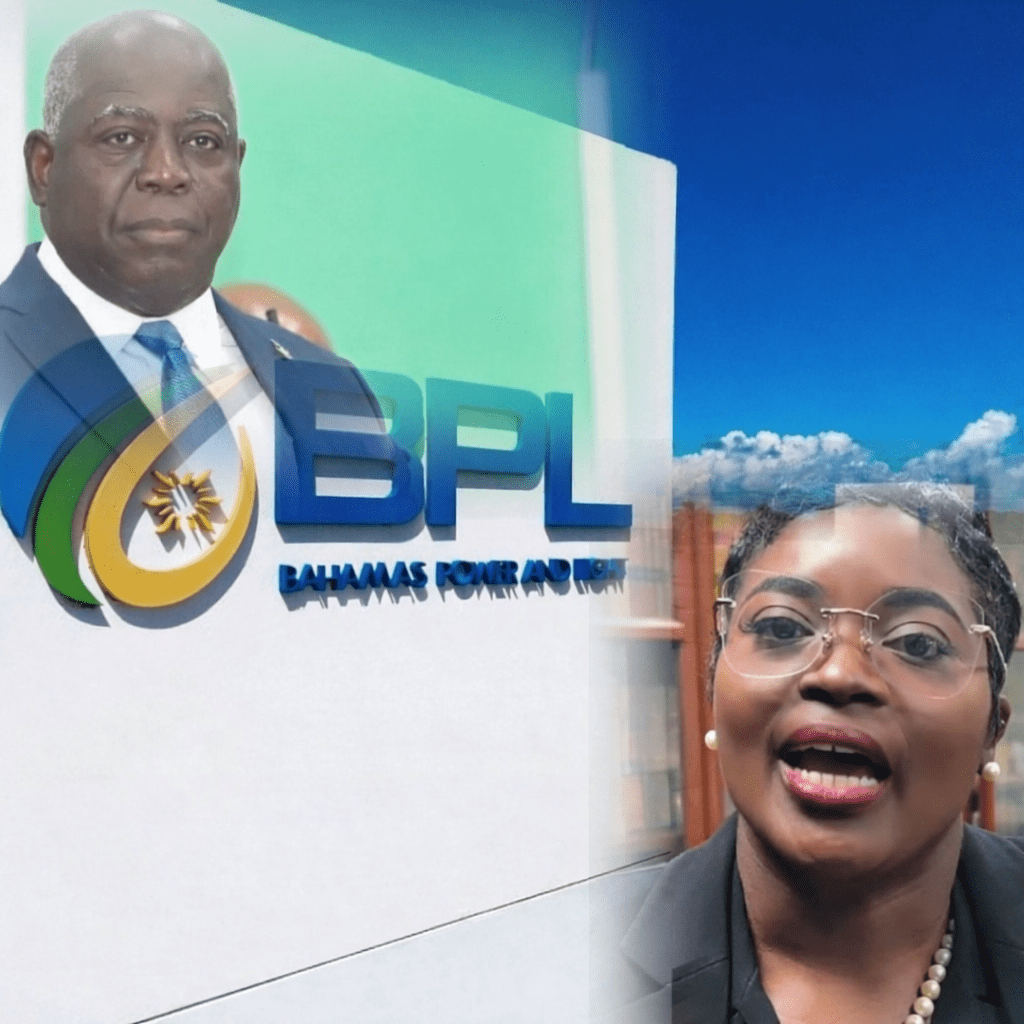
Then there is fuel hedging at Bahamas Power and Light (BPL).
Public reporting from The Nassau Guardian documented a dispute between the former BPL CEO, Whitney Heastie, and Energy Minister JoBeth Coleby-Davis over whether the hedging program implemented under the Minnis administration produced savings.
Heastie’s October 18, 2021, letter to then-Minister Alfred Sears asserted that the hedging strategy had already saved approximately $30 million over 13 months and projected up to $55 million in savings by January 2022. He further stated that because fuel costs are passed directly to consumers, those savings translated into reduced fuel charges.
Minister Coleby-Davis later publicly disputed that characterization, stating that due to the operational state of the Clifton plant and fuel mix realities, there were “no savings” in practical terms. The Davis administration also acknowledged inheriting approximately $100 million in fuel-related debt.
The controversy deepened when the government declined to execute additional hedge trades that BPL’s hedging committee and board had reportedly recommended in order to lock in lower fuel prices. Both Minister Sears and Prime Minister Davis publicly stated they were not advised that those trades needed to be executed — a claim the Opposition challenged.
Here lies the broader issue: when a former CEO documents savings, an Energy Minister says there were none, and the Prime Minister states he was never advised — yet the public is later told to simply trust that a new hedging strategy will be better — confidence becomes strained.
If there were no savings, why did BPL’s own documentation project millions in cost reductions?
If there were savings, why were subsequent trades not executed?
If Cabinet was not properly briefed, what does that say about internal governance?
And if it was briefed, who is contradicting whom?
The Prime Minister cannot reasonably ask the Bahamian people to “trust the process” while appearing unaware of what his ministers were being advised — or while his ministers publicly contradict documented positions from state executives.
Equally troubling is the tone sometimes adopted toward critics. When members of the public question inconsistencies, they are occasionally met with condescension — as though they simply “do not understand.” But the information now being used to defend government policy was not always proactively shared with the public at the time decisions were made. You cannot withhold clarity, then criticize citizens for lacking it.
Leadership requires coherence. It requires transparency. And above all, it requires that a Cabinet speak with one factual voice.
As a general election approaches, the Bahamian people will weigh not just promises of a new hedging program, or renewed hospital plans, or future deals for Grand Bahama — but the track record of cancelled agreements, delayed replacements, and internal contradictions.
Trust is not demanded.
It is earned.
The Bahamian people deserve better and the Progressive Liberal Party (PLP) fails for one reason; it is their nature.
End
 My Morning Paper