
Once, when asked about capital punishment as a response to violent crime, Philip Davis was quoted as saying:
“I’m looking for solutions. When we start talking about hanging, this is not a solution, that’s after the fact… I am trying to prevent killing.”
It sounded thoughtful. Almost Minority Report-ish — pre-empt the damage before it happens. And fair enough. We took the Prime Minister at his word.
Which is why one would hope he applied that same logic to the nation’s finances.
Because what we are witnessing now looks less like prevention and more like creative accounting dressed up as optimism — or, less charitably, an attempt to look fiscally “appealing” as another general election approaches.
According to The Nassau Guardian, growing government arrears are raising serious fiscal concerns, with economists warning that the public is not being given a full picture of the country’s financial position.
The numbers are not trivial.
While the Davis administration projects that revenue intake in the second half of the 2025/2026 fiscal year will magically align with its target of a $75 million surplus, unpaid invoices and arrears have ballooned to $241 million, up from $121 million at the same point in the previous fiscal year.
That is not belt-tightening. That is kicking the can.
The government, as has long been the case, operates on a cash-based accounting system — meaning revenue is recorded when cash is received, but expenses are only recorded when bills are actually paid. If you don’t cut the cheque, the expense simply doesn’t exist. On paper.
Bahamian economist Therese Turner-Jones put it plainly: this approach does not give the public a full view of the government’s true financial position. It creates an incomplete — and arguably misleading — snapshot of fiscal health.
This is not a novel critique. The International Monetary Fund has, for years, urged The Bahamas to adopt accrual-based accounting, precisely because cash accounting allows liabilities to be hidden in plain sight.
So, here is the unavoidable question:
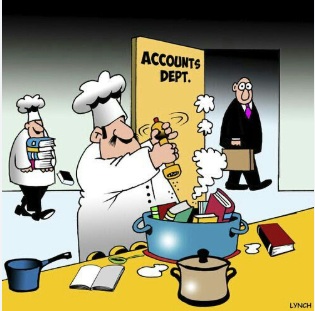
How does a country produce a surplus while its bills are piling up unpaid?
A surplus, after all, is not the absence of spending — it is the excess of revenue over recognized expenses. When those expenses are merely postponed, the so-called surplus is little more than a fiscal mirage.
And when those arrears eventually come due — as they always do — the surplus doesn’t just shrink. It disappears.
Even as unpaid obligations rise and national debt continues to grow, the Davis administration remains committed to promising a surplus it first announced during the last Budget Communication. That timeline came and went. The target was quietly shifted to this fiscal year.
Yet today, the country appears to be in a deeper financial hole than it was at the same point in 2025.
Which raises another uncomfortable question:
If the government could not balance the books, then, with fewer arrears, how exactly does it plan to do so now — much less produce a $75 million surplus?
This is why grand fiscal proclamations made on the eve of an election should always be treated with caution. Because making the numbers “work” usually requires someone else to pay the piper — and historically, that piper is the Bahamian people.
We are told not to worry. We were told to trust Prime Minister Davis as he told to trust his government’s projections. We are told that revenue in the second half of the fiscal year will save the day.
We were told that last year too.
To the best of public knowledge, it didn’t happen.
So, clear-thinking Bahamians and Bahamians of goodwill, buckle up.
A surplus built on unpaid bills is not fiscal responsibility — it’s deferred reality. And deferred reality has a way of arriving all at once, usually with interest.
And when it does, no amount of accounting gymnastics will soften the landing.
The New Day Progressive Liberal Party (PLP) fails for one reason; it is their nature.
END
 My Morning Paper