
Fred Mitchell—yes, that Fred Mitchell, now wearing the dual hats of PLP Chairman and part-time Sunday school narrator—has once again taken to the podium to critique the FNM with all the confidence of a man who has apparently never met irony… or a mirror.
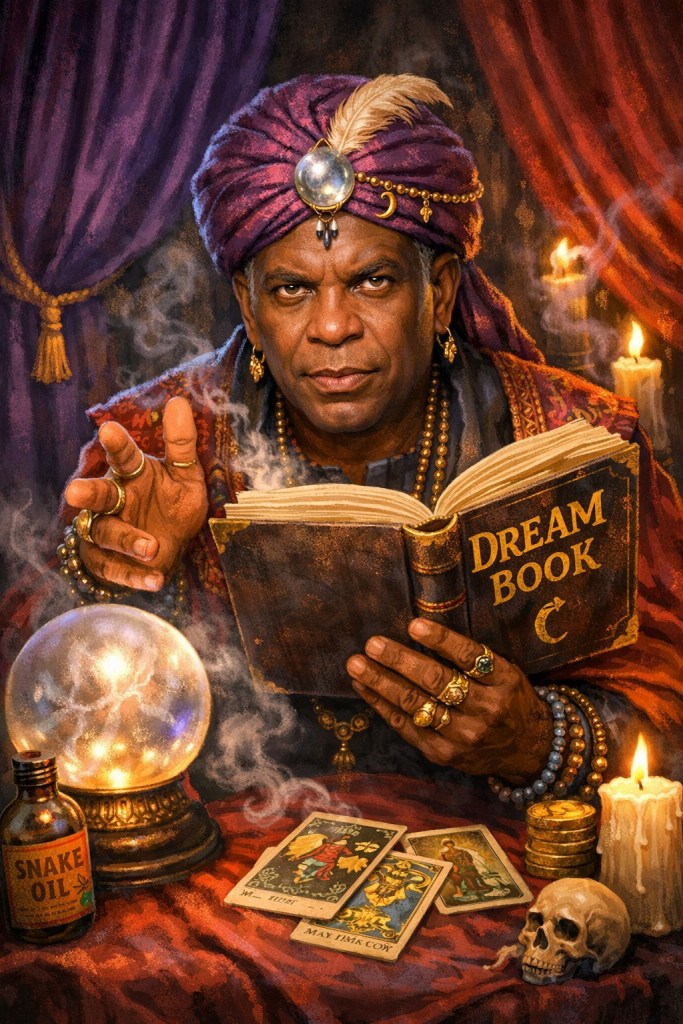
His review of the FNM’s campaign launch under Michael Pintard reads less like analysis and more like a dramatic reading of a prophecy he found scribbled in the margins of his “dream book”—a document which, judging by PLP governance, appears to be less strategic plan and more bedtime fiction. According to Mitchell, the event was underwhelming. Which is interesting, because by his own admission, he wasn’t even there. One assumes his “scouts” were dispatched with the same precision as PLP policy execution—enthusiastic, but not at all reliable.
But let’s get to the real performance: Mitchell’s attempt to diminish Pintard by tying him to his time as a Cabinet Minister under Hubert Minnis. Now, that’s a bold strategy—bold in the sense that it requires the audience to forget that Mitchell himself has been a Cabinet Minister under multiple PLP administrations. Not one. Not two. But enough to qualify for a loyalty punch card.
And how did those administrations fare? Well, let’s just say the electoral results were so “impressive” that both Mitchell and then-Prime Minister Perry Christie managed the rare political feat of losing their seats. That’s not just a bad night—that’s a full-blown democratic eviction notice.
So, when Mitchell lectures about performance and credibility, it lands a bit like a chef with a long history of kitchen fires critiquing someone else’s seasoning.
Even more curious is his ongoing commentary about Marvin Dames, whom he references with the kind of certainty usually reserved for court verdicts—except, inconveniently, there hasn’t been one. For a man trained in law, Mitchell seems remarkably comfortable skipping past the “innocent until proven guilty” part and heading straight to the closing arguments… in the court of public opinion.
Which brings us to his pearl-clutching over “jeopardizing investigations” and “defaming possibly innocent people.” A fascinating concern—particularly when viewed alongside his own public commentary. It’s the political equivalent of someone setting off fireworks indoors and then complaining about the smoke.
Mitchell also seemed deeply troubled by who was not at the FNM event, listing names like a substitute teacher taking attendance. But in doing so, he conveniently ignored who was there—because that might disrupt the narrative. It’s a bit like reviewing a movie by focusing only on the empty seats in the theatre rather than the film itself.
And then there’s the sudden, almost tender concern for former leaders like Hubert Ingraham—a man the PLP has historically treated with all the warmth of a tax audit. Now, apparently, he’s being invoked like a long-lost uncle at a family reunion. One can only assume this newfound affection is less about respect and more about political convenience.
In the end, Mitchell’s critique tells us far more about the PLP’s current playbook than it does about the FNM. It’s a mix of selective outrage, historical amnesia, and theatrical indignation—seasoned, of course, with a generous helping of biblical references for dramatic effect.
Because if there’s one thing we’ve learned, it’s this: when the substance is thin, the sermon gets longer.
The Progressive Liberal Party (PLP) fails for one reason; it is their nature.
END
 My Morning Paper