My Morning Paper – February 6, 2026 – “From Cancellation to Celebration: The PLP’s Fuel Hedging Hypocrisy”

One thing you must grant Prime Minister Philip Davis — aka “Secret Squirrel” — is that the man can keep a secret. In fact, he kept such a magnificent one that it took him four and a half years to drop what he clearly considers a “bombshell.” Only now, with an election horizon looming, does the Prime Minister suddenly remember that fuel hedging exists.

It appears that what we were told was “New Day” governance was, in reality, a masterclass in benign neglect. The Davis administration cancelled — or simply allowed to quietly expire — the fuel hedging program left in place by the Free National Movement (FNM), only to now suggest that it wasn’t cancelled out of incompetence, but because it was supposedly “not done correctly.” How convenient that this revelation arrives years after Bahamians were left to sweat under sky-high electricity bills.

Let us not forget the great missing memo saga. At the time, there was talk of a letter from then-BPL Minister Alfred Sears to the Office of the Prime Minister regarding the hedge. The OPM, of course, claimed amnesia — “never received it.” A classic case of political selective hearing.

Meanwhile, ordinary Bahamians were forced to endure painfully higher electricity rates, even as the New Day PLP tried to gaslight the country into believing that what they were seeing on their BPL bills was just a collective hallucination.

Now — suddenly — the same government that scrapped the hedge is racing back to embrace fuel hedging as if it were a brand-new, revolutionary idea. They even claim they have already implemented it. Forgive me, but am I the only one seeing the contradiction here?
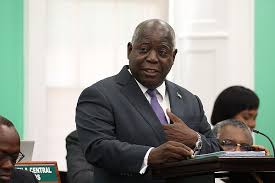
In the House of Assembly, we were treated to yet another theatrical exchange between Prime Minister Davis and Opposition Leader Michael Pintard over the BPL fuel hedge — so heated that Deputy Speaker Sylvanus Petty had to play referee. Davis boldly declared that the FNM “did not do it correctly,” as if that absolves him of four and a half years of inaction.

He waxed poetic about hedging being a responsible tool — when aligned with infrastructure, of course — conveniently ignoring the fact that if the previous system was flawed, his government had more than enough time to fix it instead of letting it lapse.

Then there is the ever-mysterious question of what fuel was actually covered under the FNM’s hedge. The Prime Minister refuses to lay the relevant documents on the table in Parliament, leaving everyone to wonder: Was only one type of fuel covered? And if so, why didn’t the “New Day” government correct that immediately instead of doing nothing?

The entire saga feels like a classic PLP playbook: create or worsen a crisis, then ride in on a “Golden Wave” pretending to be the saviour. Much like their theatrics over shanty town demolitions — opposing them in opposition, only to rush in and complete them once in office under the very same legal framework they once condemned.

In short: cancel a hedge, blame the last government, let Bahamians pay more, and years later repackage the same idea as if it were divine inspiration. Truly, a masterclass in political spin.

This is simply surreal.

The Progressive Liberal Party (PLP) fails for one reason; it is their nature.

END
My Morning Paper- 03 February 2026 – When the Truth enters Uninvited

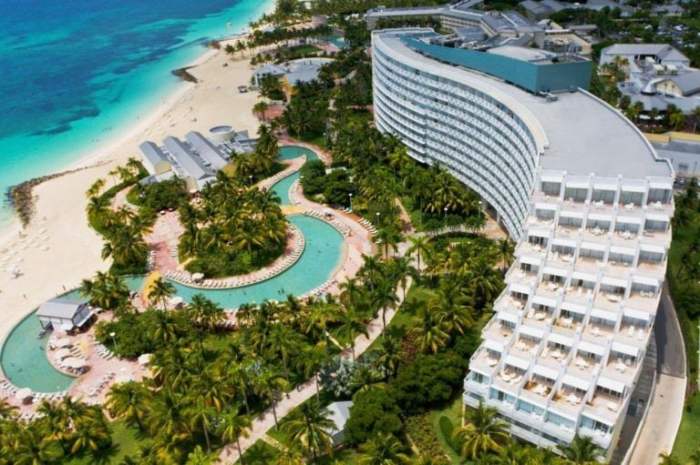
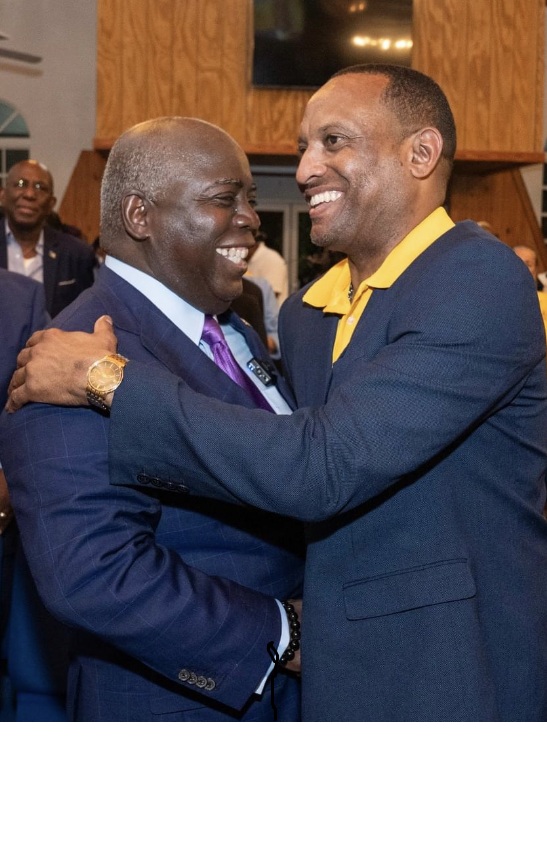
Apparently, Kingsley Smith — the PLP’s standard-bearer for Western Grand Bahama and Bimini — and Prime Minister Philip “Daddy Brave” Davis seems to have missed the Chairman’s latest memo about speaking to the media or rather not speaking to them.  Their apparent failure to read it has produced what the government can now only politely call a “miscommunication,” but what the rest of Grand Bahama and The Bahamas  would recognise is that these two senior officials are telling two very different stories about the same hotel.

As The Nassau Guardian aptly put it, “Mixed signals on Grand Lucayan” — and that may be the understatement of the year.

On one side, we have Prime Minister Davis, confidently strolling out of PLP headquarters declaring, with all the certainty of a man cutting a ribbon, that the Grand Lucayan has been sold and that the mysterious new owner is somewhere “working his plans.” On the other side, we have Kingsley Smith — ratified, refreshed, and apparently unscripted — calmly informing the press that “the hotel transaction did not happen at this time.”

So, either the Prime Minister has discovered a Schrödinger-style sale — simultaneously completed and not completed — or Mr. Smith accidentally wandered off the party line and stumbled into the territory of uncomfortable truth.

Smith, to his credit, tried his best to spin optimism out of the situation, reminding everyone that things in business can “happen” or “fail,” and that this is all about investor money, not government money. Which is a lovely sentiment, except that Grand Bahamians have been watching this particular business deal “happen” and “fail” for years while the resort continues to sit like a very expensive, very empty monument to broken promises.

Apparently, Kingsley Smith — the PLP’s standard-bearer for Western Grand Bahama and Bimini — and Prime Minister Philip “Daddy Brave” Davis seems to have missed the Chairman’s latest memo about speaking to the media or rather not speaking to them.  Their apparent failure to read it has produced what the government can now only politely call a “miscommunication,” but what the rest of Grand Bahama and The Bahamas  would recognise is that these two senior officials are telling two very different stories about the same hotel.

As The Nassau Guardian aptly put it, “Mixed signals on Grand Lucayan” — and that may be the understatement of the year.

On one side, we have Prime Minister Davis, confidently strolling out of PLP headquarters declaring, with all the certainty of a man cutting a ribbon, that the Grand Lucayan has been sold and that the mysterious new owner is somewhere “working his plans.” On the other side, we have Kingsley Smith — ratified, refreshed, and apparently unscripted — calmly informing the press that “the hotel transaction did not happen at this time.”

So, either the Prime Minister has discovered a Schrödinger-style sale — simultaneously completed and not completed — or Mr. Smith accidentally wandered off the party line and stumbled into the territory of uncomfortable truth.

Smith, to his credit, tried his best to spin optimism out of the situation, reminding everyone that things in business can “happen” or “fail,” and that this is all about investor money, not government money. Which is a lovely sentiment, except that Grand Bahamians have been watching this particular business deal “happen” and “fail” for years while the resort continues to sit like a very expensive, very empty monument to broken promises.

My Morning Paper- 02 February 2026 – The Disappointed Daddy

Prime Minister Philip “Daddy Brave” Davis — a nickname that sounds less like a term of endearment and more like a promotional jingle cooked up in a campaign war room — appears to be in a perpetual state of shock that the Bahamian people keep refusing to clap on command.

You would think, by now, that a man who seems chronically disappointed in everyone except himself might pause for a moment of self-reflection. But no — disappointment is a one-way street in the Brave Davis administration.

Back in December, Daddy Brave was disappointed in the Bahamas Union of Teachers for being, well… teachers who expected the pay increases they had been promised. Imagine that — public servants believing the government when it says it will pay them. How terribly unreasonable of them.

He told them, essentially: “Relax, this was a gift from me anyway — you should be grateful, not negotiating.”
It’s a fascinating brand of leadership — somewhere between benevolent monarch and confused department store Santa.

Fast forward to today, and now we have nurses staging a “sick-out” because — plot twist — they weren’t paid their overtime. Apparently, this came as a total surprise to the Prime Minister, who acts as though the Ministry of Finance is run out of a secret underground bunker that he is not allowed to enter.

We are supposed to believe that the Minister of Finance — who controls the nation’s purse strings — had no idea that essential healthcare workers weren’t being paid? That’s like the captain of a ship saying, “I had no idea we were sinking until someone mentioned water.”

Then, when the nurses quite reasonably protest, the Prime Minister emerges again in full “disappointed parent” mode.

He says he values them. He says other countries are trying to poach them. He says he has done so much for them since taking office. And then — with a straight face — he asks them to simply trust him.

So, Prime Minister, a simple question: Where exactly were these nurses when you came into office — and where are they now?
Because from where most Bahamians are standing, “better off” doesn’t usually include working overtime and not getting paid for it.

It is almost comedic — in a dark, political satire kind of way — to hear you lecture public servants about “trust” after they dare to demand the money they already earned. You speak as if they were naughty children who just needed to sit quietly and wait their turn.

But here’s the punchline, Prime Minister: trust is a two-way street.

You say they should trust you — but you clearly don’t trust them enough to communicate honestly, to keep your word promptly, or to ensure they are paid on time. You want their blind faith but offer them bureaucratic fog in return.

So why should they trust you?

What in your track record suggests that your promises arrive on time? What evidence tells them that “we will sort it out” doesn’t mean “we will get to it when it’s politically convenient”?

Listening to Prime Minister Davis try to talk his way out of this non-payment debacle would be hilarious — if real people’s livelihoods, and real patients’ lives, weren’t hanging in the balance.

Because at the end of the day, this isn’t just about hurt feelings or political embarrassment — it’s about nurses, the hospital, its patients, and a government that seems very good at sounding shocked, and far less good at paying what it owes.

The Progressive Liberal Party fails for one reason; it is their nature.

END
My Morning Paper- 29 January 2026 – Sounding Trump-ish

I remember a time—not so very long ago—when Prime Minister Philip “Do It Properly” Davis lectured the nation about order, process, and the sacred necessity of doing things the right way. Shanty towns, we were told, must be demolished carefully, methodically, and above all, properly.

Fast-forward to today, with the election clock ticking louder than a woman’s biological clock at a family reunion, and suddenly all that talk of patience and precision has gone straight out the window. These days, it seems the Prime Minister has abandoned any lingering commitment to “doing things right” in favour of doing things right now—details to be sorted out later, if at all.

This week, even the CEO of the Grand Bahama Power Company (GBPC), Dave McGregor, appeared to politely choke on his morning coffee as he acknowledged the… let’s call it awkwardness of the Prime Minister’s announcement that the government had signed a Memorandum of Understanding (MoU) with Emera Incorporated to “gain control” of GBPC.

Yes—gain control. Minor problem, though: no one seems quite sure who actually has control to give.

As reported by The Nassau Guardian:

“Emera: No deal yet with govt – GBPC deal raises questions after Emera says talks still preliminary – FNM questions if announcement was a pre-election exercise.”

According to the article, a full 24 hours after the Prime Minister triumphantly announced the MoU in Grand Bahama, GBPC quietly informed employees and the public that a government purchase was merely a possible option, and that there was—how shall we put this—no final agreement.

In an internal memo, Mr. McGregor diplomatically acknowledged what everyone else immediately noticed:

“Firstly, I want to acknowledge that hearing this via a press conference from the prime minister was far from ideal for our valued employees.”

Translation: This is not how this is usually done.

He went on:

“Our overwhelming preference was to ensure we could complete a transaction before any information was shared, but the prime minister felt the news could not wait.”

Ah yes. The news could not wait. Elections have that effect.

Now, one can only speculate why the CEO found the timing so awkward, but I’ll go out on a limb and suggest it’s because all the I’s were not dotted, the T’s were not crossed, and the basic question of who actually owns the power company remains stubbornly unanswered.

Which brings us—again—back to the Grand Bahama Port Authority (GBPA), who appear to be learning in real time that they may have quietly relinquished control of the power company… without being informed of such a life-altering decision.

Four years in, and Grand Bahama still seems to be the place where announcements go to outrun reality.

It now appears that the long-running argument over who controls the power company is about to make its inevitable return to the headlines—like a bad sequel no one asked for.

Now, you can call me a pain in the ass, but when a Prime Minister announces that he intends to regulate, control, or acquire something as critical as a power company, I feel—call me old-fashioned—that he should actually be in possession of the thing first. Otherwise, the performance starts to feel just a little… Trump-ish.

So now Prime Minister Davis must somehow fulfill yet another grand promise. But before he does that, he may want to conclude his ongoing dispute with the people who actually control the power company. Perhaps he’ll attempt to leverage the mysterious sums he claims the GBPA owes the government, gently “convincing” them that it’s in their best interest to hand over control—voluntarily, of course.

Because nothing says “doing things properly and in order” quite like announcing the end result before the deal exists, the owners agree, or the paperwork is finished.

And this, ladies and gentlemen, is what passes for progress in Grand Bahama.

The Progressive Liberal Party (PLP) fails for one reason; it is their nature.

END
My Morning Paper 26 January 2026 – Fred Mitchell’s Latest Sermon: Foreign Policy, Fairy Tales, and Political Fantasy

The Chairman of the New Day Progressive Liberal Party (PLP) and Minister of Foreign Affairs, the Honourable Fred Mitchell, has once again climbed his favourite pulpit and delivered what can only be described as another “Sermon from the Mount Fredmore.” This time, his voice note attempts to suggest—without a shred of evidence, logic, or factual grounding—that Opposition Leader Michael Pintard is somehow willing to bow to foreign pressure for political gain.

Yes, apparently the man who can’t explain his own government’s foreign policy now claims divine insight into the foreign policy intentions of the Opposition Leader. A spiritual gift, perhaps.

Mitchell’s commentary floats somewhere between poetic rambling and political projection, warning about “whispers in the king’s ear” and “foreign loyalty,” while subtly trying to paint Pintard as some kind of geopolitical sellout-in-waiting. It’s reckless, ridiculous, and deeply disingenuous. But then again, recklessness wrapped in rhetorical fluff has become something of a PLP brand identity.

Let’s be clear: there is absolutely no factual basis—none—for the insinuation that Michael Pintard is acting, plotting, positioning, or posturing in any way that would be detrimental to The Commonwealth of The Bahamas. None. Zero. Zilch. This isn’t analysis; it’s imagination dressed up as authority.

What makes this even more comical is the irony:
The PLP Chairman is accusing the Opposition of foreign policy recklessness while his own government cannot clearly articulate what its foreign policy actually is.

Not a doctrine.
Not a framework.
Not a strategy.
Not a coherent direction.

Just vibes, voice notes, and verbosity.

And while Mitchell is busy psychoanalysing Pintard, the country is still waiting to hear what the PLP’s foreign policy vision is in these trying geopolitical times. Are we strategic? Neutral? Aligned? Independent? Regional-first? Global-first? Principle-driven? Economy-driven? Silence-driven?

Because at the moment, the only consistent policy seems to be:
Talk a lot. Say little. Imply much. Explain nothing.

Fred Mitchell’s attempt to pass opinion off as fact is not just misleading—it’s dangerous. It poisons public discourse, lowers the standard of political debate, and feeds a culture where accusations replace evidence and theatrics replace leadership.

But perhaps we shouldn’t be surprised. This is the same political culture that thrives on insinuation, thrives on narrative control, and thrives on never answering the actual questions put before it.

And that brings us to the two certainties the Bahamian people have learned under this New Day PLP government:

  1. They will not answer the hard questions.
  2. They do not believe they are required to.

Because somewhere along the way, accountability became optional, transparency became ceremonial, and public service became performance art.

If foreign policy is now just another campaign prop—another fear tactic—another narrative tool—then the country isn’t being governed, it’s being managed for optics.

And if this is what passes for leadership, then perhaps the real “whisper in the king’s ear” is the sound of reality trying to get through the noise.

But unfortunately for the PLP, satire writes itself when governance fails, and comedy becomes easy when credibility is optional.

The Progressive Liberal Party (PLP) fails for one reason; it is their nature.

END
My Morning Paper- 24 January 2026 – Renovations, Delays, and a Cake Left Out in the Rain

Last night, I found myself listening to Donna Summer sing “MacArthur Park,” wondering—yet again—why on earth someone left that woman’s cake out in the rain. And then it hit me: I will probably get a clearer answer to that mystery long before I get straight answers from this New Day Progressive Liberal Party (PLP) government.

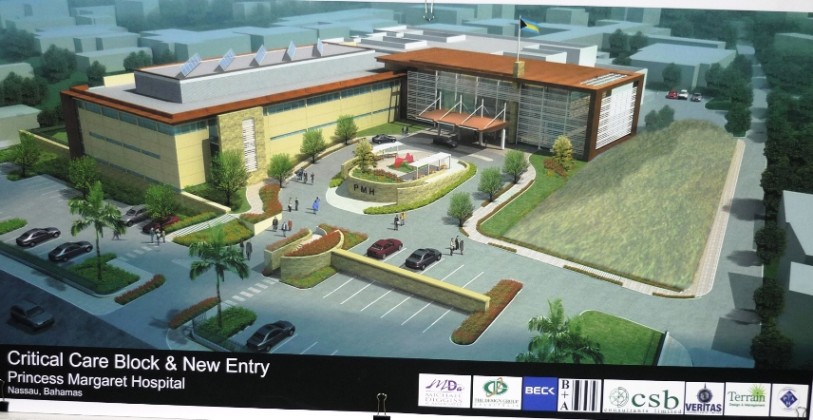
My latest bout of curiosity—bordering on disbelief—centres on the renovations to the Princess Margaret Hospital’s Critical Care Block and its four-plus year delay in completion.

According to The Nassau Guardian headline, “A&E expected to be fully occupied within six weeks, Darville says,” the Minister of Health and Wellness, Dr. Michael Darville, has once again assured the Bahamian people that relief is just around the corner—six weeks away, to be precise.

The article goes on to explain that with furniture and bedding for PMH’s Accident and Emergency department now finally “in the country,” the department should soon be fully operational. Renovations, we are told, concluded late last year, but officials were waiting—patiently, apparently—for furniture and equipment to arrive.

Dr. Darville noted that renovations inside an existing structure came with “many challenges,” including exterior works that caused interior construction to pause. All fair enough—renovations are messy business.

But here’s where the music starts to skip.

This Critical Care Block project began under the previous Free National Movement (FNM) administration, complete with financing already secured and construction underway. Then came the New Day PLP government, which promptly cancelled the existing deal, reportedly sent back the loan, and assured the country that their approach would be better, faster, and presumably drier—unlike Donna Summer’s cake.

Fast forward more than four years, and we are now being told that healthcare chaos will soon subside because—brace yourselves—the furniture has finally arrived.

Which raises a perfectly reasonable question:
Did it really take over four years to purchase and receive hospital beds, furniture, and equipment?

And a follow-up, for good measure:
If the original FNM contract had been left in place, would the Critical Care Block have been completed years ago—without throwing the healthcare system into prolonged disarray?

By cancelling the original agreement and signing a new one, the PLP effectively delayed not only construction timelines but also the ordering of critical equipment. Why not simply allow those orders to proceed under the original contract? Why dismantle a moving vehicle just to prove you can rebuild it—slower?

Instead, we’ve endured missed deadlines, shifting completion dates, and repeated assurances that this time—really, truly, honestly—everything is almost done.

All of this sounds eerily familiar. After all, this is the very same “cancel first, figure it out later” approach that has stalled progress at the Grand Lucayan Resort in Grand Bahama.

So yes, the New Day Progressive Liberal Party government has some questions to answer. And some of us sincerely hope we get those answers before we finally discover why someone left Donna Summer’s cake out in the damn rain.

Because at this point, that mystery seems far less complicated than the management of healthcare in The Bahamas.

The Progressive Liberal Party (PLP) fails for one reason; it is their nature.

End

My Morning Paper – 23 January 2026 – Campaigning by Fear: The PLP’s Old Playbook Returns – Ghost Stories, Not Governance

Having exhausted ideas, Prime Minister Philip Davis has once again returned to the political tool that seems to work best for him and his New Day Progressive Liberal Party (PLP): fear.

Taking to the campaign stage, Prime Minister Davis demanded that the Leader of the Opposition, the Hon. Michael Pintard, “come clean” about what a Free National Movement (FNM) government would allegedly do to public servants if elected. He went further, challenging Pintard to “be a man and just say it” if the plan is to send workers home.

There was, however, one small problem — no evidence was presented. No policy document. No statement from the Opposition. No historical precedent cited. Just accusation.

This is not leadership; it is fearmongering.

The Prime Minister is deliberately tapping into the most basic and legitimate anxiety of working Bahamians — the fear of losing one’s job, being unable to feed a family, and falling behind on bills. And he is doing so without substantiation, revealing a willingness to say whatever is necessary to win an election, accountability be damned.

We have seen this movie before.

In the run-up to the last general election, the PLP repeatedly suggested that if the FNM were re-elected, The Bahamas would be locked down again. This claim was made despite the fact that, at the time, the country was already reopening, global travel was resuming, and no policy statement existed indicating an intention to reverse course. It was speculation masquerading as certainty — fear dressed up as foresight.

Now, once again, ghost stories are being dusted off — this time warning of mass firings of public servants should the FNM win office.

Then there is the government’s much-touted elimination of Value-Added Tax (VAT) on non-cooked food items. Using the government’s own figures, independent calculations by economists and civic commentators show that the average household savings amount to approximately eleven dollars ($11) per year. Not per month. Per year.

Instead of engaging honestly, coming clean, with these calculations, the Prime Minister and his administration have dismissed and attacked them, conceding only that the savings may indeed be minimal — but insisting that “a savings is a savings.” What they fail to acknowledge is that it was this very government that placed extraordinary financial strain on working Bahamians in the first place. Now, just months before a general election, they present themselves as rescuers from hardships of their own making as they did with the Bahamas, Power and Light (BPL) saga; which still goes unresolved.

So let this be said clearly: while Prime Minister Davis attempts to frighten public servants with unfounded claims that an FNM government would terminate their employment, the Opposition and its supporters remain focused on one objective — ending a government that governs by fear, distraction, and political theatrics instead of transparency and results.

The people of The Bahamas deserve better.

The Progressive Liberal Party (PLP) fails for one reason; it is their nature and The Bahamas deserves better.

END

My Morning Paper – 22nd January 2026 – Insanity as Policy: Cancelling Progress and Calling It Governance

They say the definition of insanity is doing the same thing over and over again while expecting a different result. If that definition holds, then the New Day Progressive Liberal Party (PLP) government has not merely flirted with insanity — it has made itself quite comfortable there.

Upon taking office, one of the PLP’s first major acts was not progress, but pause. Not delivery, but delay. The government halted, reviewed, and ultimately cancelled the ongoing redevelopment works at the Princess Margaret Hospital (PMH), going so far as to return borrowed funds already earmarked for the project. Years later, Bahamians are left navigating a healthcare system stretched to its limits, while the promised “better deal” remains more slogan than solution.

History, it seems, was not meant to be learned from — only repeated.

Fast forward to Grand Bahama, where the same script was dusted off and reused. The PLP stopped, reviewed, and cancelled the Free National Movement’s deal for the Grand Lucayan Hotel, declaring it “not in the best interest” of the island or the country. The people were told to be patient. They were assured something better was coming.

Nearly five years later, Grand Bahama is still waiting.

As Member of Parliament for East Grand Bahama, Kwasi Thompson, recently noted, had the PLP not cancelled the sale of the Grand Lucayan resort to Royal Caribbean International (RCI) and the ITM Group, the island would have already been reaping the benefits. Jobs. Economic activity. Confidence. Instead, the property sits idle, workers endure uncertainty and delayed pay, and an island once promised revival remains trapped in limbo.

Rather than amend the deal, the PLP chose to walk away entirely — abandoning partners widely regarded as credible, committed, and capable. Since then, RCI has gone on to successfully complete major developments elsewhere in The Bahamas, while ITM has moved forward with new cruise port projects in Mexico alongside Hutchison Ports and Carnival Cruise Line. In other words, the problem was not the partners — it was the paralysis.

The PLP now points to a new agreement signed with Concord Wilshire Capital, but movement has been minimal, transparency scarce, and results nonexistent. Meanwhile, tourism in Grand Bahama suffers, the local economy stagnates, and hope continues to be deferred.

And yet, in a move that has become all too familiar, Bahamians are told once again that these projects — PMH, the Grand Lucayan, and others — can only be completed if the PLP is re-elected.

Apparently, governance now comes with a condition clause.

The New Day government still owes the Bahamian people a clear explanation as to how cancelling the original Grand Lucayan deal was in Grand Bahama’s best interest, especially when one of the very groups involved has since proven its capacity to deliver — just not for Grand Bahama.

At some point, promises must give way to performance. At some point, “review” must lead to results. And at some point, Bahamians must ask themselves whether it truly makes sense to re-elect a government that keeps pressing the reset button, only to demand more time to finish what it chose to undo.

To do otherwise would not just be hopeful, it would be insane.

The Progressive Liberal party (PLP fails for one reason; it is their nature and The Bahamas deserves better.

END

My Morning Paper – 20 January 2026 – Indignation Over Information

Prime Minister Philip Davis recently took to the airwaves to deliver what can only be described as a feel-good headline: the New Day PLP government would eliminate Value-Added Tax (VAT) on uncooked food as a bold move to ease the cost of living for Bahamian families.

Cue the applause.

That is, until the Nassau Guardian did something rather inconvenient — it applied basic, real-world mathematics to the figures provided by the government itself. Using the government’s own declaration that it would forgo $15 million in VAT revenue, The Guardian calculated that the average household would see savings of approximately $11 per month, or $127 per year.

Apparently, math is now offensive.

The Guardian’s calculation did not emerge from thin air; it flowed directly from numbers publicly announced by the Office of the Prime Minister (OPM). Yet instead of offering a counter-calculation or a clearer breakdown, the government chose indignation over information.

In an article titled “OPM on defensive: Guardian stands by VAT story,” the Prime Minister’s Office insisted the newspaper had committed a “miscalculation” and made an “erroneous claim.” However — and this is the truly remarkable part — OPM provided no calculations of its own to demonstrate how The Guardian was wrong.

None. Zero. Zilch.

PAUSE, because this part matters.

The $15 million figure was not invented by journalists; it was announced by Minister of Economic Affairs Michael Halkitis himself. Therefore, The Guardian’s math was not only reasonable — it was inevitable. When the government supplies the figures, it cannot later pretend shock when someone uses them.

But unwilling to relive another embarrassment reminiscent of their much-touted “budget surplus,” the New Day PLP government scrambled to reframe the narrative, stating:

“When that $15 million is averaged among the 118,221 households in The Bahamas (as recorded in the 2022 census), the savings amount to $11 per month or $127 a year.”

Which, of course, is exactly what The Guardian reported.

Then came the pivot.

OPM now claims that The Guardian mistakenly equated the government’s fiscal impact with consumer benefit, asserting that the $15 million represents a “bottom-line fiscal impact number” after accounting for business credits and substituted spending — and that the real consumer benefit is somehow “significantly larger.”

Say what now?

If that is the case, where are the numbers? Where is the breakdown? Where is the explanation that transforms $15 million into something more substantial for Bahamian families standing at the grocery checkout?

Even more telling, multiple economic and financial experts consulted by The Nassau Guardian expressed confusion over the government’s explanation — confirming that this was not a failure of public understanding, but a failure of public communication.

Then, as if the waters were not muddy enough, OPM added yet another layer of contradiction, claiming that any estimate of average monthly savings is “not credible” without updated data from a Household Expenditure Survey — noting that the last survey was completed in 2013 and a new one is still underway.

So let us get this straight.

The government announced a sweeping cost-of-living relief measure, provided a headline figure, promoted it as wealth-building policy — and now says that no one can credibly calculate its impact because the necessary data does not exist?

If that is the case, one must ask: Was this policy introduced without proper homework? And if so, why should the public trust numbers that the government itself now suggests are unreliable?

The people of The Commonwealth of The Bahamas will always welcome genuine, viable solutions to ease the crushing cost of living, especially under current economic conditions. But the Bahamian people are not obligated to suspend critical thinking — particularly when broad promises are rolled out conveniently close to a general election.

Relief announcements without transparent calculations are not policy; they are performance.

And condemning a newspaper for doing arithmetic with government-supplied figures only reinforces the uncomfortable suspicion that the New Day PLP government prefers applause over accountability.

END

My Morning Paper – 19th January 2025 – Shoot and Kill

Less than a year before the next general election, the New Day Progressive Liberal Party (PLP)—the very same administration that once seemed far more enthusiastic about chasing tax arrears than chasing opportunity—now wants Bahamians to believe it can casually walk away from roughly $150 million in annual revenue for the good of the people.

And what is this grand act of economic compassion?

An $11-a-month grocery savings.

Yes—eleven dollars. Not per week. Not per shopping trip. Per month.

According to the government’s own arithmetic, this works out to about $127 a year for the average household. We are told—without even a hint of irony—that this is enough to help Bahamian families “build wealth.”

Build. Wealth.

One imagines the light bill, rent, mortgage, insurance premiums, school fees, fuel costs, and grocery inflation all pausing respectfully while the average Bahamian carefully sets aside that majestic $11 to begin their journey to generational prosperity.

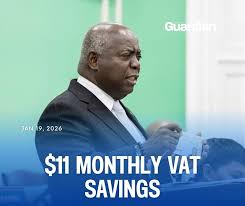
This revelation comes courtesy of a headline from The Nassau Guardian proclaiming: “$11 monthly VAT savings – Tax cut could put $127 in household pocket annually.” Truly inspiring stuff—if your monthly struggle exists solely in the imagination.

Prime Minister Philip Davis, in a national address, called the VAT removal on uncooked foods a “significant step.” His Minister of Economic Affairs, Michael Halkitis, assured the public that the $15 million annual revenue loss would be “offset by economic growth.”

Offset how, exactly? Details are apparently unnecessary when faith is abundant.

Let us pause here. This is the same government that only months ago triumphantly declared the economy had “turned the corner.” If that were genuinely the case, why wait until election season to suddenly discover compassion? Why not deliver this relief earlier—quietly, responsibly, and without campaign undertones?

The answer, of course, is timing. Political timing.

Instead of lifting the average citizen to a level where survival is not a monthly gamble, the PLP is offering handouts disguised as policy—$11 a month and a pat on the head. Not structural reform. Not meaningful wage growth. Not serious energy cost relief. Just enough to generate headlines, not enough to change lives.

And let us be clear: the average Bahamian is not struggling because VAT on groceries exists. They are struggling because their income cannot keep pace with the cost of living. Eleven dollars does not rebalance a household budget. It does not stop eviction notices. It does not prevent power disconnections. It does not build wealth. It barely builds a lunch special.

Meanwhile, the government asks the public to simply trust that “other revenue measures” will magically fill a $150 million hole—measures that remain conveniently unnamed, unquantified, and unexplained. Any talk of projected budget surpluses now floats firmly in fantasy territory.

So yes, VAT relief is welcome. No one disputes that. But let us not insult the intelligence of the Bahamian people by pretending that $127 a year is an economic lifeline rather than a political talking point.

The real question isn’t whether Bahamians appreciate relief.
It’s whether they are expected to survive on symbolism while the bills remain painfully real.

Because wealth is not built on $11 a month.
But elections, apparently, might be.

The Progressive Liberal Party (PLP) fails for one reason; it is their nature and the Bahamian people deserve better.