My Morning Paper – December 10, 2024 – False Impressions and Lies

When a person or group of persons are exposed for alleged wrong-doing; for something that they have gotten away with for quite some time, they often take a strong defensive stance.  They would attempt belittle or intimidate through insults those that are exposing them – this is one of the traits of a bully.

Today, this is what we seem to be facing with the governing New Day Progressive Liberal Party (PLP) government, as they attempt to contort the events that occurred in the House of Assembly last week into some dark and criminal event to suit their version of reality; but if there is one thing that we have learned about the Progressive Liberal Party (PLP), especially this New day version, there is truth and there is PLP truth and the two DO NOT assimilate.

“Pintard: PM painting a false picture over House chaos” – The Nassau Guardian

Excerpt from this article;

“Free National Movement (FNM) Leader Michael Pintard said it is “shameful” that Prime Minister Philip Brave Davis is seeking to paint a false picture about the opposition’s actions in the House of Assembly last week, saying video evidence proves they were not violent.

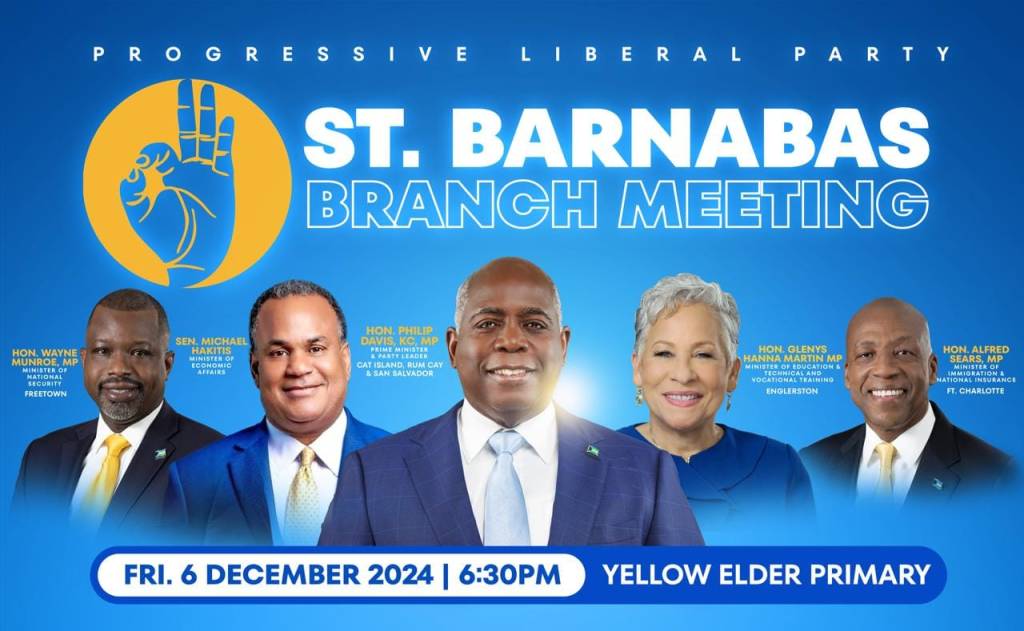
While speaking at a Progressive Liberal Party (PLP) event in St. Barnabas on Friday, Davis repeated claims that the FNM hatched a plan for the party’s deputy leader, Shanendon Cartwright, to hurl the speaker’s mace out of the House of Assembly’s window.

Davis called the FNM’s leadership “unhinged” and said its members were “violent,” noting that Deputy Speaker Sylvanus Petty and the House of Assembly’s sergeant at arms were injured during the ensuing mayhem.

During an interview with The Nassau Guardian on Sunday, Pintard denied that Cartwright’s actions were a premeditated event.

He said the FNM is deeply ashamed of the behavior of the prime minister and the speaker in the version of the story they told on the incident.

“Both of them sought to sensationalize the events in terms of casting blame on the opposition as if we … were responsible for injuries that they sought to raise concerning the deputy speaker and the sergeant at arms, both of whom we enjoy a cordial, civil relationship with,” Pintard said.”

The Progressive Liberal Party (PLP) as a party and a government is at this very moment attempting to have the Hon. Michael Pintard, the Leader of the Free National Movement (FNM) apologize to the country for the “embarrassing” events of 4th of December 2024, where in an act of frustration at the blatant disrespect to the Opposition of the people of the country, the governing PLP attempted to stifle democracy and shut down the Opposition in the House of Assembly as they tended to the people’s business.

It now appears that the governing party along with it surrogates are suggesting that the Opposition always had the option of simply walking out and turning their backs on the people’s business and acquiescing to the bully tactics of the New days PLP government; what purpose would that have served?

Whose agenda would that have served?

Now these questions can and will be asked of the current manner in which events unfolded and my answer is that at the very least well-meaning persons would be willing to sit down have a conversation about it and the way forward; I say well-meaning person because it has become quite clear that many are not “well ‘meaning” individuals and would rather criticize the events than lift the country up from the events that fomented them; this is how a country truly progresses.

It is indeed a sad state of affairs that instead of accepting their culpability in the events of last week Wednesday, as it is clear that Speaker was very instrumental in sensationalizing the events and unfairly blaming the opposition for the injuries sustained, this New Day instead resorts to attempts to minimalize them, and thereby any future unrest to bring about democracy when the peoples voice is not being heard or simply ignored.

The Progressive Liberal Party fails for one reason, it is within their nature.

END
My Morning Paper – December 09, 2024 – Holding the Progressive Liberal Party Government to Account 

Today I write to speak truth, expose failures, and remind the people of this great nation that we deserve better. 

Just this past weekend, the Progressive Liberal Party (PLP) gathered in St. Barnabas in what can only be called a mini-rally, as they brought all the big guns. Now, you would think they would have focused on pressing issues like the rising cost of living, crime or the struggles faced by everyday Bahamians. But no—what did they do? They spent their time painting the Free National Movement (FNM) as “unhinged” and “violent.” 

How does that help the average working man put food on your table?

 How does that reduce his light bill?

How does that get his children a better education? And then, amid the noise and distractions, Prime Minister Philip Davis made yet another promise

“Plans to reduce the cost of living will be revealed in the new year.”   

Does this sound familiar? 

Let me remind you of what he said back in January of this year: 

“Our top three priorities are the economy, education, and crime.” 

Now here we are, nearly a year later, and the promises to reduce the cost of living have been recycled for another time, with no real action taken and you can draw your very own conclusions as to how they did on their other two priorities at the time. 

As if this were not bad enough, just a day or two earlier we had  one of their senators—a man whose name I won’t bother to mention because most Bahamians don’t know it either—decided to defend this government’s failures by attacking Senator Michela Barnett-Ellis for speaking the truth. She called out the PLP for failing to stimulate economic growth, and instead of addressing the issues, this senator delivered a condescending tirade with cherry-picked numbers: 

2017 (PLP’s departure): $12.24 billion GDP 

2020 (FNM’s term): $9.9 billion GDP 

2022 (PLP’s return): $13.14 billion GDP 

2023: $14.43 billion GDP 

Let us take a decent look at this, shall we? This senator conveniently ignored the fact that the 2020 numbers reflect a global pandemic that crippled economies worldwide. The rebound wasn’t because of any PLP magic—it was a natural recovery as borders reopened and commerce resumed. 

And while the PLP pats itself on the back, Bahamians are struggling. Rising costs have eaten away at any so-called “progress” this government claims to have made. The Prime Minister himself admitted,

“Many people are not feeling it.”

So, what has this New Day PLP government done to reduce the cost of living? Nothing. What they have done is promise, delay, and distract. Their strategy seems to be hoping that inflation will cool down naturally so they can claim credit for forces beyond their control.  

As they are trying to do with the economy 

Meanwhile, Bahamians are caught in the middle, simply trying to survive. Families are choosing between paying bills and putting food on the table. Businesses are struggling under the weight of rising costs. And instead of offering solutions, this government is focused on petty politics. 

Ladies and gentlemen, we cannot sit idly by while this government plays games with the future of our country. The PLP has proven time and time again that they are not capable of delivering real progress. Their nature is to fail, and their promises are empty. 

The Free National Movement, under the leadership of Hubert Minnis, laid the groundwork for recovery. The plans and policies that have brought any relief or progress were put in place by the FNM. The record is there for all to see—I dare them to prove me wrong.

It’s time to stop the grandstanding. It’s time to stop the distractions. It’s time to focus on what really matters: reducing the cost of living, creating opportunities, and building a brighter future for every Bahamian. 

The PLP has failed you, but we won’t. Together, we will build a Bahamas where the people—not the politicians—come first.

END

My Morning Paper – December 06, 2024 – Bullying by the PLP’s Playbook

As one listens to the voice note by Fred Mitchell, Chairman of the Progressive Liberal Party (PLP) and Minister of Foreign Affairs, it is unmistakable that the PLP has dusted off its toxic playbook of bullying—a desperate attempt to silence dissent, control its base, and intimidate opponents into a submission of silence The characteristics of bullying—threats, insults, and exclusion—are all on full displayed here, stopping just short of outright threats.

Mitchell’s remarks are riddled with inflammatory language aimed at disparaging those who dare to challenge the PLP. Referring to individuals as “Uncle Toms” is not merely name-calling; it’s an insidious tactic designed to demean, isolate, and publicly shame. By weaponizing this historically loaded term, Mitchell not only insults individuals but also seeks to undermine their credibility and worth.

Then there’s his use of exclusionary language: “All PLPs and people of goodwill.” This phrasing creates a clear divide—you’re either aligned with the PLP, or you’re cast out as lacking “goodwill.” It’s the oldest trick in the bully’s handbook: force conformity by ostracizing those who don’t fall in line. This type of rhetoric stifles open dialogue and reinforces a culture of fear and submission.

A closer look at Mitchell’s tone reveals an unmistakable sense of insecurity. Like most bullies, his bravado masks a deep fear of losing power. By accusing opponents of being “violent, criminal, and unpatriotic,” Mitchell is engaging in classic projection—attributing his party’s divisive tactics to others. His claims that the opposition’s actions undermine the “rule of law” are ironic, given the PLP’s own history of suppressing dissent and fostering discord.

Mitchell’s voice note also attempts to co-opt the narrative of Bahamian history for political gain. He chastises the Free National Movement (FNM) for allegedly mocking a significant moment in the nation’s fight for freedom, yet fails to acknowledge the broader context: the PLP’s refusal to engage in democratic debate is what escalated tensions in the first place. To suggest that dissenting voices are “burning the house down” for power is disingenuous, especially when the PLP’s own actions—such as silencing the opposition—have contributed to this political discord.

Mitchell’s remarks are a textbook example of bullying behavior:

While he stops short of direct threats, his rhetoric is rife with implications that dissenters will face social and political ostracism; Threats and Intimidation.

The use of “Uncle Toms” is a deliberate attempt to insult and demean; Name-Calling.

By framing loyalty to the PLP as synonymous with “goodwill,” Mitchell excludes and isolates those who hold opposing views; The Threat of Exclusion.

Overall, the real tragedy here is the chilling effect such rhetoric has on democratic discourse. Instead of fostering an environment where ideas can be debated and challenged, the PLP’s leadership has chosen to weaponize language to silence critics. This is not the behavior of a party confident in its vision for the Bahamas; it is the behavior of a party desperate to cling to power at any cost.

Perhaps the most glaring irony is Mitchell’s call for “PLPs and people of goodwill” to reject the “violence” and “psychological warfare” of the opposition. This statement is rich coming from someone whose own rhetoric is steeped in psychological manipulation and divisive tactics. If the PLP truly wishes to uphold the values of unity and goodwill, it might start by reevaluating its own approach to political discourse.

The truth of the matter is this; if Mitchell’s voice note attempts to frame the FNM as the instigators of “violence, patriotism, criminality, and discord,” one cannot ignore the underlying truth: had the PLP allowed the opposition the chance to speak and address the matter at hand, this entire debacle could have been avoided. Instead, the PLP’s refusal to engage has only fueled the very discord it decries.

So that lead to me this conclusion; Fred Mitchell’s voice note is more than a partisan rant; it’s a reflection of a broader issue within the PLP’s leadership. Bullying tactics, whether through language or actions, have no place in a democratic society. It’s time for the PLP to step back, reflect, and prioritize dialogue over domination. Only then can they truly claim to act in the “goodwill” of the Bahamian people.

END

My Morning Paper – December 05, 2024 – The Speaker, the Mace and the Heroic Glass of Water

Yesterday, the Free National Movement (FNM) staged a protest that had been anticipated for weeks. The Progressive Liberal Party (PLP), true to form, dismissed it as unnecessary noise. Yet, what unfolded in the House of Assembly was beyond anyone’s imagination—a spectacle where tensions boiled over, and chaos reigned supreme.

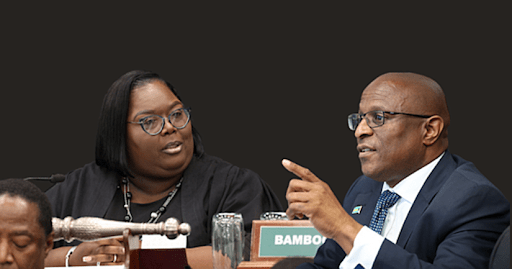
If not for a humble glass of water, we might have witnessed an unprecedented assault on the Speaker of the House, Patricia Deveaux. Let’s raise our glasses to this unsung hero—the object that “saved” the Speaker from harm.

This incident can be broken down into two separate incidences; one that highlights the questions surrounding the professional aptitude and perceived biased of the Speaker in managing the House’s proceedings and the other that addresses the issue Mace incidence.

The Speaker’s professional aptitude and perceived bias:

“Speaker: I feared for my life” – The Nassau Guardian

Excerpt from this article;

“Speaker of the House of Assembly Patricia Deveaux said yesterday she feared for her life and was “assaulted” and “almost hit” when Free National Movement (FNM) Deputy Leader Shanendon Cartwright grabbed the mace sitting in front of her and hurled it out of the House of Assembly’s window.

Deputy Speaker Sylvanus Petty received “a blow to the head” during the incident, prompting him to go to the hospital and a police officer was hurt in the leg, she said.

“This is a dark day in this political arena that we call politics,” said Deveaux when the House of Assembly resumed after a 15-minute recess following the chaotic event.

 “For the first time in my life, when I took the oath of office, I felt challenged and I was in fear for my life. I will review the tapes and I will apprise the country later of my findings, but during today’s event I was assaulted, I was almost hit. Thank God for a glass of water in the front of me.”

At this moment we will all stand and raise our glasses for the glass of water that “saved” the Speaker from being assaulted, let us move on.

First, as the Speaker speaks to feeling challenged, I would just like to suggest that The Speaker has been “challenged” from the very moment that she was named as Speaker of The House; whether this challenge is mentally or professionally, I leave this up to the reader.

It simply amazes me the manner in which the “facts” are coming together concerning this matter in the House of Assembly yesterday and the manner in which the Progressive Liberal Party Members of Parliament and it’s supporters wish now to paint them as a planned act of aggression of the Free National Movement (FNM) toward the Speaker of The House.

Let me just say, as it pertains to the accusation of the actions being planned, I would think that they were just as well planned as the formers Commissioners of Police (CoP) address to the nation the other night and it this is the case then the Free National Movement (FNM) may want to be better at pre-planning.

My opinion of yesterday’s events are formed from this report of events leading up to the moment.

The Hon. Michael Pintard sent a letter to the Speaker last week to speak.  She said she received it five (5) minutes too late.  He begged her to accommodate him and the House adjourned while he was on his feet.

Yesterday, Pintard said he sent a letter a day in advance along with his script but did not get an answer.

After the Prime Minister spoke, he requested to speak and the Speaker again ignored him. He kept asking if he would get an opportunity to speak.  She never gave him an answer.

The Hon. Michael Pintard found out they were going to adjourn the House after the Hon. Wayne Munroe spoke.

This is what I have been reliably informed led up to the events yesterday.

If these are the actual facts then it would appear that the Speaker is running the House of Assembly like it is her private space but is because of her “challenged” mental and/or professionally capacity or at “someone’s” instruction?

The Mace Incident:

 Cartwright’s removal of the mace has been painted by the PLP as an aggressive act, but its historical symbolism suggests otherwise. The mace represents the authority of the Speaker. By removing it, the Opposition effectively called for an end to the Speaker’s oversight—a procedural move rather than an attack.

The Speaker’s reaction—claiming fear for her life—rings hollow against the backdrop of events. If her actions in the House were fair and just, why would such an outburst even occur? Instead, her tenure has been marked by accusations of bias, overreach, and suppression of opposition voices. Yesterday’s dramatic events reflect deeper cracks in the PLP’s governance style.

To compare, imagine a referee in a football game who consistently favors one team. Eventually, the players on the other side will refuse to play along. Removing the “mace” is akin to walking off the field—not an act of aggression, but a rejection of perceived unfairness.

The PLP’s response to this incident reveals their inherent flaw: an inability to self-reflect. Instead of addressing grievances, they double down, painting the Opposition as aggressors. This tactic may rally their base, but it leaves the country divided and distrustful.

As for Speaker Deveaux, her claim of being “saved” by a glass of water has become a symbol—not of her victimhood, but of a moment when politics reached the height of absurdity. It’s a sobering reminder that theatrics cannot substitute for leadership.

Let us raise our metaphorical glasses—not to the glass of water, but to the hope that reason, fairness, and true democratic principles will one day prevail in the House of Assembly.

The speaker need not be in “fear for her life” if she knows that what she is doing is right and fair but it seems that this has not been her agenda from day one, she has been nothing but a ‘bully” especially to the Opposition Leader and why should he or anyone else tolerate such treatment any longer?

The Progressive Liberal Party fails for one reason, it is their nature.

END

 My Morning Paper – December 4, 2024 – The Fine Art of Playing Victim and Personal Responsibility

“Mitchell decries ‘false narrative’ on indictment” – The Nassau Guardian

Excerpt from this article;

“Progressive Liberal Party (PLP) Chairman Fred Mitchell yesterday accused several former Cabinet ministers of creating a “false narrative” around the recent indictment in the United States of three Bahamian law enforcement officers and eight other Bahamians on drug trafficking and firearms related charges.

“Where the hell have Marvin Dames, Brent Symonette, Dionisio D’Aguilar come from?” Mitchell asked in a statement.

“They are joining the actors in the FNM drama written by [FNM Leader] Michael Pintard called the ‘Sky is Falling – Doom and Gloom’, also starring [former Democratic National Alliance Leader] Branville McCartney in a cameo role.

“If this weren’t so serious, you would have to laugh at these collective political clowns. They don’t want to do the work to convince the Bahamian people that they are the better alternative. They want to create a false narrative out of this indictment in the US to ride to victory.”

Mitchell insisted, “The Bahamian people are smarter than that.”

My first question is; what is the “false narrative” that Fred Mitchell is referring to? 

It is easy to slip into a mindset of being a victim, especially when life throws you curve balls or situations that are not planned for.

Let’s take a journey into this swirling vortex of political posturing, personal responsibility, and the ever-enticing allure of the victim narrative. Today, we tackle a question as relevant as it is vexing: Is the Progressive Liberal Party (PLP) government, led by Fred Mitchell, setting up a narrative of victimhood to deflect from its own shortcomings?

And more importantly—what does this mean for governance in The Bahamas?

At this point in time it would appear that the Chairman of the New Day Progressive Liberal Party (PLP) Fred Mitchell is setting up a narrative wherein the New Day Progressive Liberal Party (PLP) government is being victimized by The United States and by its very own citizens but there is a problem with constantly setting yourself as victim.

There seems to be a propensity for the Progressive Liberal Party (PLP), when facing hardship to give into the temptation.  There is a temptation to shift blame onto external circumstances or other people; it just seems overwhelming for them. This overwhelming temptation then forces them to avoid personal responsibility in confronting their role in whatever adverse situation that they may find themselves in, usually of their own making.

But here is the thing; constantly portraying yourself as the victim only makes people lose respect for you; the reason being that because when you adopt this mandate/mindset, you are telling the country and the world that you have no control over your responsibilities and if you do not believe that you have control then why should others believe in you?

Playing the victim usually begins small because it is easy to off load your personal responsibility onto someone else but over time this mentality becomes as a “trap” and the more you use it the more powerless you appear.  As you appear more powerless then others believe that you are at the mercy of external forces, so they lose faith in you and walk away from you and your leadership; because your ability to run the country, as you have been elected to do, is then called into question.

People respect those that take responsibility for their acts and that can rise above the challenges and not be consumed by them. But by constantly blaming others for your misfortunes, simply says that you lack courage to face your challenges face on – which makes it difficult for persons to trust you.

The Progressive Liberal Party fails for one reason, it is within their nature.

END

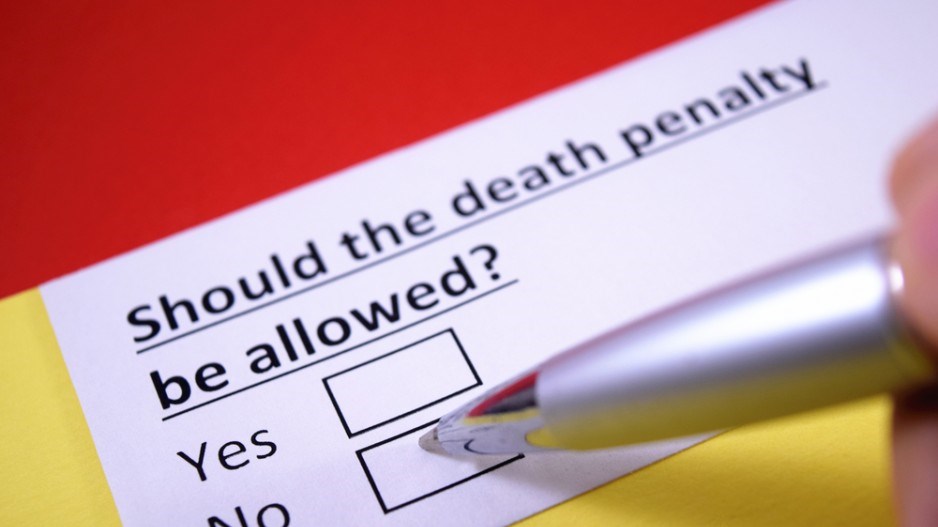
My Morning Paper – November 26, 2024 – The Death Penalty: The Pros and Cons

In recent days, the tragic murders of a 12-year-old child and a 72-year-old elderly woman have left the nation shaken and on edge. These heinous crimes have reignited calls for the application of the death penalty as a means of justice and deterrence. This debate, deeply rooted in the fabric of many societies, raises critical questions about its effectiveness in curbing crime. 

While proponents argue that capital punishment serves as a strong deterrent and delivers justice, opponents question its moral standing and practical impact. The following is a balanced synopsis of the pros and cons of the death penalty, focusing on its potential effectiveness in deterring crime.

The Death Penalty as a Deterrent to Crime: A Critical Analysis

The death penalty has long been a subject of heated debate, not only for its ethical implications but also for its effectiveness as a deterrent to heinous crimes such as murder. Proponents argue that the ultimate punishment of death serves as a powerful warning to potential offenders, creating a fear that prevents them from committing capital crimes. Critics, however, contend that the evidence supporting this claim is inconclusive and that the death penalty may not be as effective as intended. This blog explores the arguments for and against the death penalty’s deterrent effect and evaluates its role in modern criminal justice systems.

Theoretical Foundations of Deterrence:

The theory of deterrence is based on the idea that potential criminals will refrain from committing crimes if the punishment is severe, certain, and swift. The death penalty, being the most severe form of punishment, is intended to instill fear in individuals who might otherwise engage in violent behavior. The logic is straightforward: if the consequences of a crime are dire enough, rational offenders will avoid committing the offense.

Empirical Evidence: What Do Studies Say?

The effectiveness of the death penalty as a deterrent has been the subject of extensive research, with mixed results:

1. Studies Supporting Deterrence 

   Some studies suggest that states or countries with the death penalty experience lower rates of violent crimes compared to those without it. Researchers argue that the presence of capital punishment adds a psychological barrier, discouraging would-be offenders from crossing the line.

For instance, a 2003 study by economists at Emory University found that each execution in the United States may deter between three and eighteen murders. These findings indicate a correlation between the use of the death penalty and reduced murder rates, providing ammunition for proponents of capital punishment.

2. Studies Challenging Deterrence 

   Other research disputes these claims, suggesting that the death penalty does not have a significant impact on crime rates. A 2012 report by the National Research Council concluded that existing studies on the deterrent effect of the death penalty are fundamentally flawed and fail to provide credible evidence that executions reduce homicide rates.

 Countries like Canada and several European nations, which have abolished the death penalty, do not report higher murder rates than countries that retain it. This raises questions about whether factors such as socioeconomic conditions, policing efficacy, and cultural attitudes play a more significant role in preventing crime than the threat of execution.

Psychological and Practical Challenges

1. Assumption of Rationality

   The deterrent effect assumes that criminals are rational actors who weigh the consequences of their actions before committing a crime. However, many murders are crimes of passion, committed in the heat of the moment, where the perpetrator does not consider the potential punishment.

2. Certainty and Swiftness

   For deterrence to be effective, punishment must not only be severe but also certain and swift. In reality, the death penalty is often neither. Lengthy appeals processes and the possibility of wrongful convictions undermine the certainty of execution, while delays in carrying out sentences diminish its swiftness.

3. The Issue of Wrongful Convictions

   The irreversible nature of the death penalty raises concerns about executing innocent individuals. High-profile cases of exoneration due to DNA evidence demonstrate that even advanced judicial systems are not immune to error. This undermines public confidence in the death penalty and reduces its deterrent value.

Alternative Approaches to Crime Prevention

Rather than relying solely on the death penalty, many experts advocate for a multifaceted approach to crime prevention that addresses the root causes of violence. Strategies such as community policing, improved education and employment opportunities, mental health support, and restorative justice programs have shown promise in reducing crime rates without resorting to capital punishment.

Conclusion

The question of whether the death penalty serves as an effective deterrent to murder and other violent crimes remains unresolved. While some evidence suggests a potential deterrent effect, the overall findings are inconclusive and often counterbalanced by ethical, practical, and systemic concerns. In light of these complexities, it may be more productive to focus on addressing the underlying causes of crime and improving the fairness and efficiency of the criminal justice system. The ultimate goal should not merely be punishment but the creation of a safer and more just society for all.

END

My Morning Paper – November 22, 2024 – The Bahamas’ Minority Report?

“Senate president calls for resumption of hanging; PM says it’s not a solution” – The Nassau Guardian

Except from this article;

“Senate President Lashell Adderley yesterday called for the resumption of hanging in The Bahamas.

Her comments came after police reported that a 12-year-old girl was found dead with only a top on and a piece of cloth tied around her neck.

“We need to bring back hanging,” Adderley said.

“Unfortunately, the criminals do not fear the law. They are determined to take the risk to hurt people, hurt young children, and then they in turn laugh at the justice system.

“So we have to let them know that the justice system in the Commonwealth of The Bahamas is not a joke, and we are serious about justice and if that means bringing back hanging then that we must.”

Adderley said she believes that if you take a life your life deserves to be taken.

She asked, “Why should you be sitting up there, being fed by the state, relaxing for the rest of your life whereas the rest of us are out here working hard to support you?”

Prime Minister Philip Brave Davis said yesterday he’s looking for solutions to crime.

“When you start talking about hanging, that’s not a solution,” he said on the sidelines of a groundbreaking ceremony for the Centreville Hilltop Agri-Village.

“That’s after the fact. That’s after somebody would have died or been killed. I’m trying to prevent killing.

“Talking about what one has to exact after an offense has been committed, that’s not my focus right now.

“My focus is stopping offenses from being. It’s on prevention, not on punishment, at this time. Punishment has its place and yes, people should be punished and would be punished, according to law.”

But one second Mr. Prime Minister Davis capital punishment is law; I just thought that I would point this out, however, this then leads us to a complex dialogue concerning the application of capital punishment, which, as noted, is legally recognized yet bound by the Privy Council’s stipulations.  These stipulations being that this form of punishment can only be used in instances of “the worst of the worst” and the “rarest of the rarest”; who actually defines these instances.

Many may seem very emotive concerning the recent killing of the twelve year old female and some are asking that these emotions be out aside as we seek to address capital punishment and murder; so let us do just that.

In my opinion the prime minister seems to be addressing this issue more like a defense attorney than a chief legislator, as he “talks down” Progressive Liberal Party (PLP) Senate President Lashell Adderley; with this remarks reminding me of the script from the movie “Minority Report”, as he seeks to want to stop murders before they are committed.

It would appear that the prime minister is not concerned with the mitigation of crime through means of deterrence through enforcement but rather through means of “other means”; as to what these “other means” are, the rest of the country is very interested in finding out.

Earlier this week there was an instant where in it was made clear that the prime minister has no solution to our economic situation; and now he shows us that he nor any of this Cabinet or government has any solution to our crime problems – what does the prime minister and his government have a solution for?

The prime minister, while in opposition, heavily criticized the Free National Movement (FNM) government under the Hon. Hubert Ingraham for not having a solution to the crime situation, he went as far as to erect the infamous “Murder Boards”.  This would have suggested that at the time that the indeed had a solution to our crime problem, it is clear today that he did and does not.

As we navigate these troubling discussions on crime and punishment, the key will be finding a balanced approach that ensures justice while also addressing the root causes of violence. It is imperative that our leaders listen, unify, and act thoughtfully, paving the way for a safer future that reflects the values and needs of all citizens.

The Progressive Liberal Party fails for one reason, it is their nature.

END

My Morning Paper – November 14 2024 – The Issue of Transparency At Home

The Chairman of the Progressive Liberal Party (PLP) once said; “We oppose this Freedom of Information Act (FOIA).  The FNM has this view; they’ve passed something called the Fiscal Responsibly Act, The Procurement Act, The Freedom of Information Act.  All of these things have nothing to do with people’s ordinary lives. 

Freedom of Information, I don’t think so.

It’s bureaucratic, expensive to execute.

We are talking about a philosophical difference between us and them.”

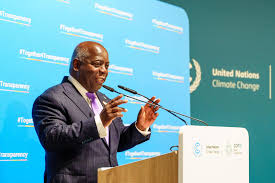
Now Prime Minister; the Hon. Philip E. Davis K.C. takes the world stage and demands accountability and transparency form the world as it related to Climate Change.

“PM calls for $1trn fund to fight climate change” – The Tribune

Excerpt from this article; “THE Prime Minister yesterday called for greater global transparency as he added his voice to calls for the creation of a $1trn fund to combat climate change.

Philip Davis KC, speaking at COP 29 conference, said The Bahamas is ‘advancing’ it’s first Biennial Transparency Report on progress towards meeting its climate change goals with funding from the Capacity-Building Initiative for Transparency (CBIT).

The Enhanced Transparency Framework (ETF) framework allows countries to track and report on national climate change mitigation policies and adaptation actions, and gain support towards achieving the global temperature and adaptation goals, including their progress on achieving individual national; determined contributions (NDCs).

‘Transparency is not merely a reporting requirement. It’s the backbone of real, lasting climate action.  For countries, transparency means acknowledging where we stand and what we need,’ said Mr. Davis.”

 I wonder if I were to rewrite that last line if all would be well with in our country; “‘Transparency is not merely a reporting requirement. It’s the backbone of real, lasting democracy”.

The New Day Progressive Liberal Party (PLP) government is at odds with “democracy.”  They are willing to go on the world stage and expect and demand transparency, accountability and democracy but apply it at their convenience at home; but real life does not work that way.

Does Prime Minister Davis not realize how contradictory this statement really is; does he even care?

Let us take a look at what he is really saying and how he is contradicting himself and his government.

Contradictions in Transparency: A Closer Look at the Davis-led PLP Government

In the same breath that Prime Minister Davis is calling for global transparency, his administration faces serious transparency issues at home. A few notable examples highlight this ongoing struggle:

Freedom of Information Act (FOIA) Delays

Despite FOIA being passed by the previous administration, the current PLP government under Prime Minister Davis has been slow to implement it fully. The delay in rolling out FOIA keeps critical information inaccessible, making it harder for Bahamian citizens to hold their government accountable.

Electricity Rate Increase

The public faced an increase in electricity rates with little explanation, drawing frustration and distrust. Many citizens questioned the financial management practices of Bahamas Power and Light (BPL), yet clear, detailed information on how rates were determined or the factors driving these costs were not provided. For a government that calls for international transparency, this lack of openness at home on issues affecting daily life reveals a troubling contradiction.

Lack of Transparency on Government Contracts

Under the current administration, there have been limited disclosures on government contracts, despite the Procurement Act being in place. While the government has a system for public procurement, the lack of timely updates and detailed contract information has raised questions. For instance, significant contracts awarded without competitive bidding remain undisclosed to the public, leaving citizens in the dark about how and where their tax dollars are being spent.

Handling of National Debt and Public FinancesThe PLP government has also been hesitant to embrace the Fiscal Responsibility Act’s mandates, which aim to increase fiscal transparency. For example, while they release budget information, certain critical reports on the country’s debt levels, particularly regarding the terms of recent borrowing, have lacked detail. This makes it challenging for citizens to understand the true state of the national debt and the strategies employed to manage it.

Conclusion

In my opinion, it’s almost surreal to see Prime Minister Davis step onto the world stage, all fired up, calling for transparency, accountability, and democracy—as if he’s auditioning for the role of “Champion of Openness” at the Global Oscars. And yet, back home, where he actually has the power to practice what he preaches, it’s like he’s developed a sudden case of selective amnesia.

The Progressive Liberal Party fails for reason, it is their nature.

END
    

My Morning Paper – November 9, 2024 – Ignorance in Action: The Cost of Political Games in The Bahamas

“Nothing is more terrible than to see ignorance in action.” – Goethe

The Progressive Liberal Party (PLP), under the guise of “good governance,” seems to have embraced what could only be described as “silly season” – a term frequently used by PLP Chairman Fred Mitchell to dismiss criticisms from the opposition Free National Movement (FNM). Ironically, Mitchell’s attempt to call out the opposition on various issues ignores the glaring contradictions in his own party’s approach to governance.

Prime Minister Philip Davis, in an attempt to address rising public frustration, recently noted that individuals’ choices impact their cost of living. While there’s some truth to the notion that personal spending habits play a role, the statement came across as dismissive, particularly since it was paired with his admission that the cost of living in The Bahamas is indeed excessively high. The average Bahamian faces soaring prices on everything from basic necessities to utilities, and attributing this solely to personal choices appears somewhat out of touch with the economic realities. Many believe that the government’s decisions have done little to ease these burdens, and instead, this approach feels more like an effort to deflect responsibility.

The government’s minimal interventions and inadequate strategies to address inflation have left citizens struggling with high prices. By pointing fingers back at citizens, Davis’s statement comes off as an exercise in deflection rather than genuine problem-solving. For many Bahamians, this statement symbolized yet another instance of the PLP avoiding accountability for failing to alleviate the pressing financial struggles facing their people.

Deputy Prime Minister Chester Cooper recently chastised individuals for circulating a video that, according to him, “could hurt the image of The Bahamas.” While it’s understandable for a government official to be concerned about the nation’s global reputation, this stance would feel a lot more genuine if the PLP’s own history didn’t reveal a similar approach. In fact, when the PLP was in opposition, they famously placed billboards across Nassau that highlighted The Bahamas’ murder count, all in an effort to paint the FNM government as inept in handling crime. This move undoubtedly impacted the country’s image, yet the PLP seemed comfortable with these tactics when it benefited their political agenda.

It’s difficult for many Bahamians to reconcile Cooper’s criticism with the PLP’s past actions. It raises the question: does the PLP’s concern for the nation’s image only extend as far as its political expediency? This double standard demonstrates an unwillingness to own up to their own actions, especially when those very actions mirror the same behaviour’s they criticize.

The “silly season” label has become the PLP’s go-to defence whenever faced with valid criticism, conveniently ignoring the fact that their approach to governance has often been marked by a lack of introspection and accountability. Since May 2007, the PLP has seemingly been in a perpetual “silly season,” displaying a pattern of pointing fingers outward while avoiding difficult self-reflection.

The Bahamian people deserve a government that doesn’t just speak about “good governance” but embodies it through consistent actions, even when those actions require acknowledging past missteps.

The Progressive Liberal Party (PLP) fails for one reason; it is their nature.”

END

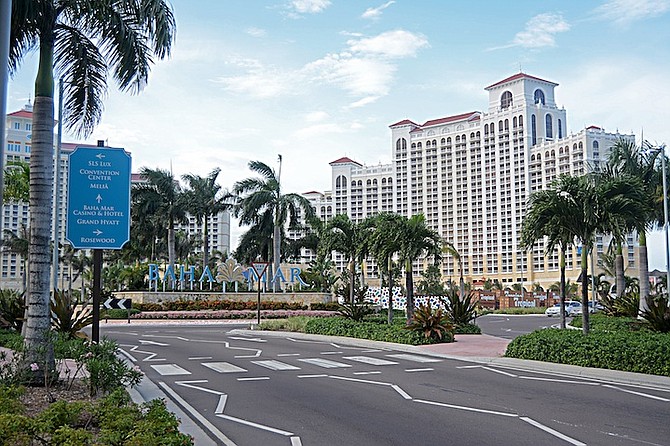
My Morning Paper – November 06, 2024 – The Hypocrisy of the Progressive Liberal Party’s Stance on the Baha Mar Scandal – Collusion or Coincidence?

In recent weeks, Fred Mitchell, Chairman of the Progressive Liberal Party (PLP), has been vocal in his criticism of Sarkis Izmirlian, the developer behind the troubled Baha Mar project. By branding Izmirlian a “failed developer,” Mitchell and the PLP appear to be sidestepping a recent judgment against China Construction America (CCA), which implicates officials within the “New Day” government in alleged collusion. This attempt to deflect raises pressing questions about the PLP’s accountability, transparency, and the potential hypocrisy of their current stance.

The Attempt to Paint Izmirlian as Solely Responsible

In the narrative promoted by Mitchell and the PLP, the failure of Baha Mar is pinned solely on Sarkis Izmirlian, while the role of CCA, the project’s lead construction company, and potential issues of sabotage remain unmentioned. Mitchell’s argument suggests that the collapse of Baha Mar was due to Izmirlian’s negligence or incompetence, rather than any outside interference. However, this interpretation ignores a key aspect of the situation: the $1.6 billion judgment awarded to Izmirlian in damages, which implies something far more complex than simple developer failure.

The judgment against CCA indicates that Baha Mar’s struggles were not due to a “failed” developer alone but rather due to interference, delays, and possible collusion involving Chinese interests and Bahamian officials. The omission of these facts in Mitchell’s statements risks misleading the Bahamian public about the true circumstances surrounding Baha Mar’s failure.

The PLP’s Questionable Role in a “Private Matter”

Mitchell’s recent remarks instruct Bahamians to “sit down, be quiet, and stay out of this private dispute.” Ironically, it was the PLP, during the Christie administration—where Mitchell and current Prime Minister Philip Davis both served as cabinet ministers—that injected itself into what was initially a private matter. The administration justified its intervention as a measure to protect Bahamian subcontractors’ interests. Yet, it is now clear that the intervention may have been far from neutral, and it may even have contributed to the challenges faced by the developer.

Despite funds being provided by Izmirlian’s team to pay subcontractors, the contractor, CCA, used this payment to purchase and develop another Bahamian property. For this to happen, permits and approvals would likely have been required, suggesting that Bahamian officials had to be aware of and possibly even sanctioned these actions. This scenario is eerily reminiscent of other instances of poor communication and accountability, such as the controversial entry of Carnival into the country early in the PLP’s administration, where no official took responsibility for the permits issued.

Collusion or Coincidence?

The forensic reports due later this month are likely to shed more light on the potential collusion between Bahamian officials and CCA. Nonetheless, the timing and circumstances surrounding the PLP’s involvement in the project have raised serious concerns. The assertion that the government’s intervention was motivated purely by concern for Bahamian subcontractors is at odds with the details emerging from the investigation, which suggests that key decisions may have been influenced by interests beyond national pride or protectionism.

Mitchell’s current rhetoric ignores the complexity of these issues, preferring to keep public attention on Izmirlian as the “failed developer” rather than acknowledging the PLP’s role in the ongoing scandal. The Bahamian people deserve an honest answer: if the PLP’s only aim was to help subcontractors, how did a significant amount of the project’s funds end up being used by CCA for separate ventures? Why was no oversight applied to ensure that funds were used appropriately?

Deflection Tactics and the FNM Blame Game

Another deflection tactic used by the PLP is the suggestion that the Free National Movement (FNM) is spreading rumors about potential job losses due to the judgment against CCA. This narrative seems to serve as a smokescreen to distract from the PLP’s alleged role in the scandal. There is little concrete evidence that the FNM has launched such a campaign, and it’s worth asking why Mitchell would choose this moment to bring up such a claim.

If the PLP’s involvement was as innocent as they claim, why not fully cooperate with the investigation and present the forensic evidence to the public? The refusal to engage with the findings of the judgment—while deflecting blame onto a developer and political opposition—paints a picture of a government unwilling to be accountable for its past actions.

Accountability Is Key

For a government that prides itself on being a “New Day” administration, the PLP’s handling of the Baha Mar scandal demonstrates a continuation of old ways. Bahamians deserve answers, transparency, and an end to the rhetoric that paints one party as the scapegoat while officials avoid accountability for their own potential missteps.

In light of the judgment, it’s time for Mitchell and the PLP to follow their own advice and exercise caution in their statements. As more information emerges, it’s essential that the PLP is held accountable for its role in the Baha Mar fiasco and that the Bahamian people receive clear and transparent answers about how and why government officials were involved.

END