
At lunch the other day there was a fervent debate over the recent ruling by Chief Justice Indra Charles, wherein she found that certain members of parliament were in violation of the constitutional rights of members of Save The Bays (STB) when these persons tabled private emails and financial information of this group in the House of Assembly, exposing not to the parliament but to the public.
The persons that I was talking to is of the opinion that a dangerous precedent has been set by allowing the judiciary to ‘meddle’ in the affairs of parliament; as there is supposed to be a clear separation of powers between them, there point may be valid if not for the question of, who stands up for the ordinary citizen when a member of parliament seeks to, knowingly or unknowing, violate the constitutional right of a citizen of the Commonwealth of the Bahamas by invoking Parliamentary privilege?
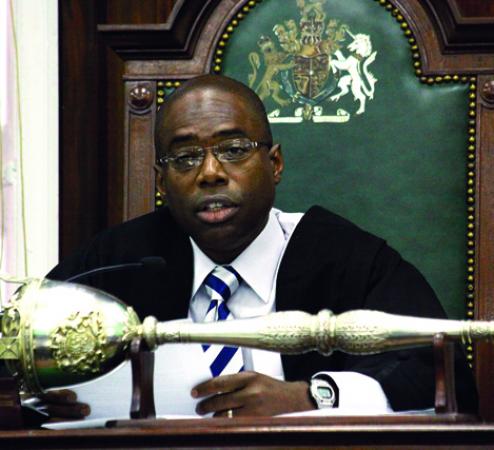
“Speaker slams STB ruling – Major says Judges Findings ‘astonishing” – The Nassau Guardian.
Excerpt from this article; “Speaker of the House of Assembly Dr. Kendal Major yesterday berated recent ruling of Supreme Court Justice Indra Charles as an ‘apparent violation’ of the principle of the separation of powers’, saying he is unaware of any other jurisdiction in the Commonwealth where the court attempts to curtail the actions of Parliament.’
Charles ruled Tuesday morning that the Marathon MP Jerome Fitzgerald breached the constitutional right to privacy of members of the environmental group Save The Bays (STB), when he disclosed their private emails and financial details in Parliament.
The judge ordered Fitzgerald to pay $150,000 in damages.”
Now I am pretty hard pressed as to what is it that the Speaker is ‘astonished’ about? As a fact of law Fitzgerald violated the constitutional right to privacy of members of STB’ when he revealed their private information in Parliament but then there is this little matter of the ‘shield’ of “Parliamentary Privilege” that minister Fitzgerald and Foreign Affairs minister, Fred Mitchell, now wish to hide behind and the legal question that Justice Charles was faced with and felt compelled to answer was, does parliamentary privilege usurp the constitutional right to privacy; does the need of a few outweigh the needs of the many? She ruled in favor of the many; which seems right and logical to me but there is this ‘fear’ of the erosion of democracy.
“Mitchell said the decision is a ‘serious blow’ to the parliament and its work and it must not be allowed to stand.
He said it is incumbent that the matter be prosecuted through the Privy Council.
‘No one in their wildest imaginations would have thought that a judge of the Supreme Court would grant an order to restrain MP’s from speaking in Parliament to defend the nation’, Mitchell said.”
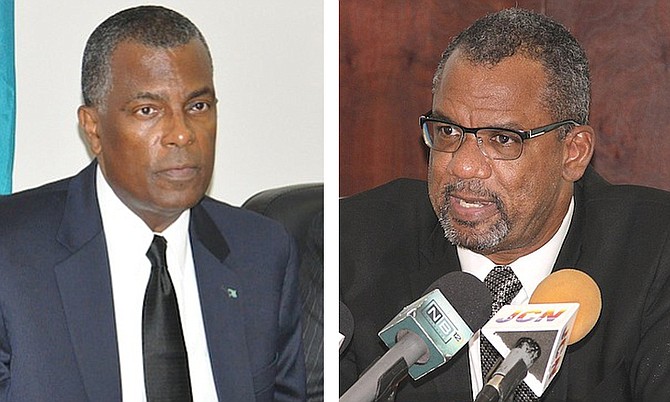
No, Minister Mitchell, ‘no one in their wildest imaginations would have thought’ that ‘honorable’ members of parliament would seek to violate a citizens constitutional right to privacy by revealing such private and personal information to Parliament and the public at large without their permission or explaining as to how this information was legally obtained and without just cause beside the suggestion of defending the nation against those that would seek to destabilize an already unstable government, claims that have yet to be substantiated; this indeed is unthinkable and borders on the criminal.
A few major questions arising from this quagmire that many have charges has set a ‘dangerous precedent’ is what about the present precedent being set that now seeks to make it ‘aright’ for a Member of Parliament to take any information, gathered from ‘anywhere’ and feel free and justified in ‘exposing’ it in Parliament with the mere suggestion of ‘in the interest of national security’? And who prevents this from happening when it is clear that a Member of Parliament has ‘crossed the line’? Well the only person at this time is the Speaker of the House, who has failed horrendously in this instances but yet has the nerve to find the judge’s ruling ‘astonishing’; this young man cannot be serious and should be replaced immediately if he is, as this issue is much too big to be labeled as a ‘teachable moment’.
Then from the following statement from Kendal Major, Speaker of the House, it seems clear that he does not realize that he has allowed members to use privilege to abuse public trust and has therefore learned nothing.
“I have said and will continue to say that once the rules of the House are observed by members of Parliament and once the members do not use their privilege to abuse public trust, I will, as long as I am Speaker of this House, continue to defend their right to speak openly and freely in this House.”
The Progressive Liberal Party fails for one reason, it is their nature.
END
 My Morning Paper
Any citizen’s right to free speech, be it in Parliamentiary sphere or in the Public sphere, is limited by another’s right to privacy. A right to free speech does not give ANYONE the absolute right to say WHAT one pleases, WHERE one pleases, or WHEN one pleases. The right to free speech comes with both right and responsibility. It is particularly important that when one uses his or his right to “freedom” of speech, he or she must take cognizance of the fact that there are those in society who may act upon what was said to the detriment of others. This is particularly crucial when leaders and people who have National influence speak. I am reminded of the murder of Thomas Becket, archbishop of Canterbury, who was murdered because King Henry II uttered the words, “Will no one rid me of this troublesome priest?” This speaks eloquently to the disastrous result of the power of the use of free speech when used irresponsibly by those who lead…Believing the king meant for Becket to be murdered, four knights rode to Canterbury Cathedral and killed Becket on the 29 December 1170. It must also remembered that the concept of Parliamentary Privilege/Immunity was instituted to protect Members of the Upper and Lower Houses of Parliament from the king, particularly Charles II, who was beheaded for entering the Lower Chambers of the English Parliament.
LikeLike