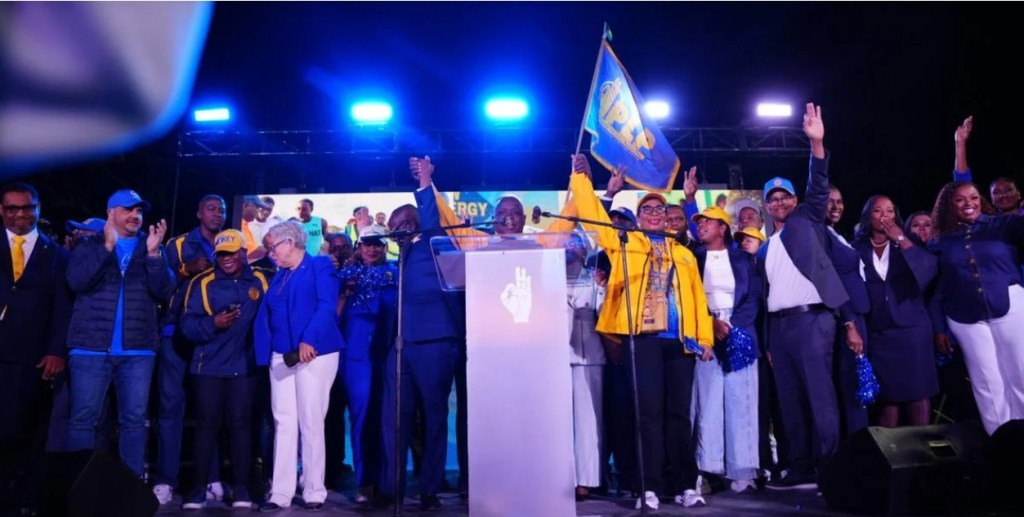
My Morning Paper 28 February 2026 – The True Fiscal Health of The Bahamas -Surplus on Paper, Arrears in Reality

Once, when asked about capital punishment as a response to violent crime, Philip Davis was quoted as saying:

“I’m looking for solutions. When we start talking about hanging, this is not a solution, that’s after the fact… I am trying to prevent killing.”

It sounded thoughtful. Almost Minority Report-ish — pre-empt the damage before it happens. And fair enough. We took the Prime Minister at his word.

Which is why one would hope he applied that same logic to the nation’s finances.

Because what we are witnessing now looks less like prevention and more like creative accounting dressed up as optimism — or, less charitably, an attempt to look fiscally “appealing” as another general election approaches.

According to The Nassau Guardian, growing government arrears are raising serious fiscal concerns, with economists warning that the public is not being given a full picture of the country’s financial position.

The numbers are not trivial.

While the Davis administration projects that revenue intake in the second half of the 2025/2026 fiscal year will magically align with its target of a $75 million surplus, unpaid invoices and arrears have ballooned to $241 million, up from $121 million at the same point in the previous fiscal year.

That is not belt-tightening. That is kicking the can.

The government, as has long been the case, operates on a cash-based accounting system — meaning revenue is recorded when cash is received, but expenses are only recorded when bills are actually paid. If you don’t cut the cheque, the expense simply doesn’t exist. On paper.

Bahamian economist Therese Turner-Jones put it plainly: this approach does not give the public a full view of the government’s true financial position. It creates an incomplete — and arguably misleading — snapshot of fiscal health.

This is not a novel critique. The International Monetary Fund has, for years, urged The Bahamas to adopt accrual-based accounting, precisely because cash accounting allows liabilities to be hidden in plain sight.

So, here is the unavoidable question:
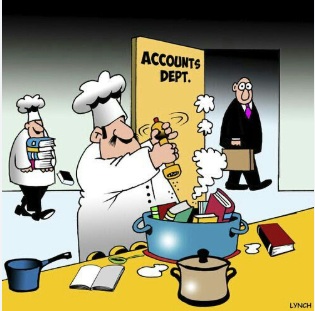
How does a country produce a surplus while its bills are piling up unpaid?

A surplus, after all, is not the absence of spending — it is the excess of revenue over recognized expenses. When those expenses are merely postponed, the so-called surplus is little more than a fiscal mirage.

And when those arrears eventually come due — as they always do — the surplus doesn’t just shrink. It disappears.

Even as unpaid obligations rise and national debt continues to grow, the Davis administration remains committed to promising a surplus it first announced during the last Budget Communication. That timeline came and went. The target was quietly shifted to this fiscal year.

Yet today, the country appears to be in a deeper financial hole than it was at the same point in 2025.

Which raises another uncomfortable question:

If the government could not balance the books, then, with fewer arrears, how exactly does it plan to do so now — much less produce a $75 million surplus?

This is why grand fiscal proclamations made on the eve of an election should always be treated with caution. Because making the numbers “work” usually requires someone else to pay the piper — and historically, that piper is the Bahamian people.

We are told not to worry. We were told to trust Prime Minister Davis as he told to trust his government’s projections. We are told that revenue in the second half of the fiscal year will save the day.

We were told that last year too.

To the best of public knowledge, it didn’t happen.

So, clear-thinking Bahamians and Bahamians of goodwill, buckle up.

A surplus built on unpaid bills is not fiscal responsibility — it’s deferred reality. And deferred reality has a way of arriving all at once, usually with interest.

And when it does, no amount of accounting gymnastics will soften the landing.

The New Day Progressive Liberal Party (PLP) fails for one reason; it is their nature.

END
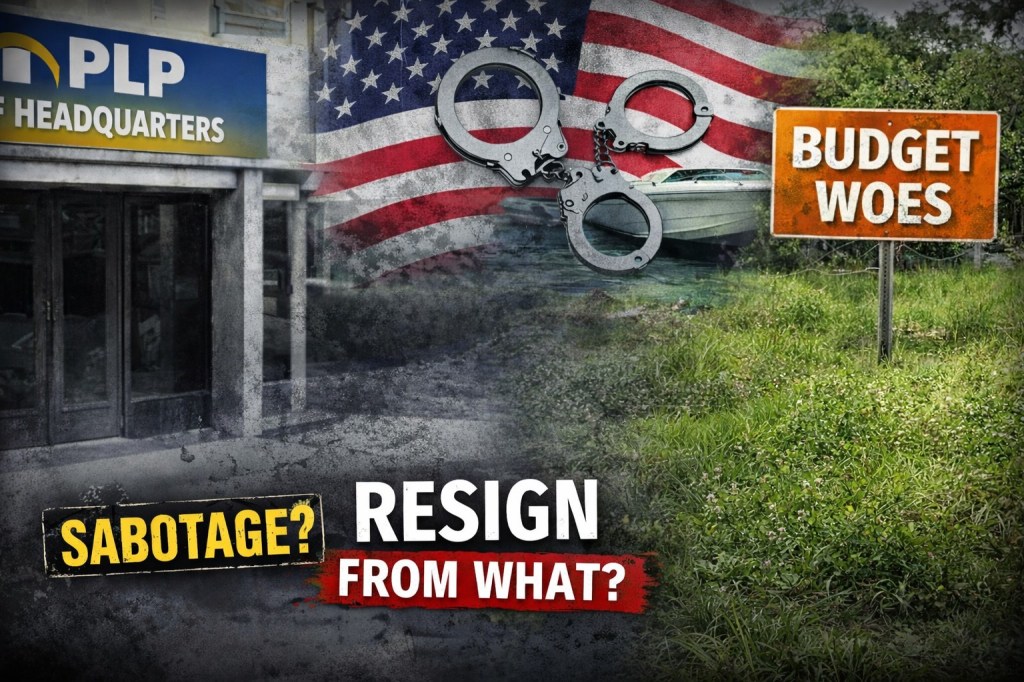
My Morning Paper 25 April 2026 – Political Theatre vs. Legal Reality And Resign From What Exactly?

There is something almost theatrical about the way the Progressive Liberal Party (PLP) has approached the latest attempt to politically crucify Marvin Dames.

If volume were evidence and outrage were proof, the case would already be closed.

Instead, what we actually have is this:

  • A 2024 business arrangement.
  • A former business associate.
  • That associate allegedly using a vessel to traffic drugs.
  • That associate arrested in the United States.
  • That associate reportedly confessing.
  • And no public charge, allegation, or evidence tying Marvin Dames to the criminal conduct.

Let’s pause there.

No charge.
No indictment.
No finding.
No legal connection.

Yet we are told Mr. Dames must resign.

Resign from what exactly?

He is not currently a Member of Parliament. He is not a Minister. He is not in government. He is a political candidate.

But in today’s Bahamian political climate, apparently association—no matter how distant, no matter how unproven—is enough to warrant public execution. Evidence is optional. Narrative is everything.

The irony, of course, is rich. This is the same party that routinely warns Bahamians about “believing everything on social media,” yet seems quite comfortable amplifying speculation when it suits the political objective of damaging an opponent.

If there is evidence, present it. If there are charges, file them. If not, then perhaps we should resist the temptation to substitute mob sentiment for due process.

Meanwhile… Back at Gambier House;

While the PLP is busy demanding resignations from people who do not hold office, something far more interesting is unfolding within its own ranks.

According to reporting by The Nassau Guardian, Southern Shores MP Leroy Major publicly claimed his constituency efforts were “sabotaged.”

Sabotaged.

Not by the opposition.

But allegedly by someone at PLP headquarters.

This followed a public video by PLP candidate Obie Roberts proudly announcing an arrangement with the Bahamas Department of Corrections to use prison labour to clean up a park in Southern Shores.

Let’s be clear: supervised prison labour programs are legal and have long existed. That is not the issue.

The issue is this:

  • The sitting PLP MP says there was an existing maintenance contract.
  • He claims that contract was ended.
  • He claims someone at PLP headquarters controlled his contracts.
  • Then prison labour appears in the same space to do the same work.

That is not opposition spin. That is a sitting PLP MP speaking.

So naturally, a few uncomfortable questions arise.

Who at PLP headquarters has the authority to cancel constituency contracts?

Why would a prospective candidate coordinate public works in a constituency that already has a sitting MP from the same party?

Was this governance—or internal political maneuvering?

And most importantly: who benefits?

So, now let us widen the lens.

Public disclosures indicate that the Bahamas Public Parks and Public Beaches Authority reportedly spent approximately $31 million against a $24 million budget between July 2024 and March 2025.

That is roughly a $7 million overrun.

So, here is the question no one seems eager to answer:

If Beaches and Parks is overspending its allocation, why are maintenance contracts allegedly being terminated?

And if contracts are terminated, is prison labour being used as a cost-saving substitute?

Or is it being used as a politically convenient substitute?

Because here is the part no one is saying out loud:

If an existing contractor was displaced, the government may still have financial obligations tied to that arrangement. You do not simply erase cost by replacing workers with inmates. Oversight, supervision, equipment, and administrative expenses still exist.

Which means this is either:

  • A budgeting problem,
  • A political problem,
  • Or both.

The Chairman of Beaches and Parks, McKell Bonaby, owes the public a detailed accounting of where the money went—especially in a year of overspending.

Transparency should not be seasonal.

The troubling pattern here is not that politics is being played. Politics is always played.

The troubling pattern is selective indignation.

When an opposition candidate has no charges, no indictment, and no legal link to a crime, the PLP demands moral purification.

When a sitting PLP MP alleges sabotage from within his own party and questions swirl about contract terminations and prison labour substitution, the silence is deafening.

If standards matter, they must apply evenly.

If accountability matters, it must apply internally.

If evidence matters, it must matter all the time—not just when it is politically convenient.

Until then, calls for resignation will sound less like principle and more like performance.

And Bahamians are smart enough to know the difference.

The Progressive Liberal Party fails for one reason; it is their nature.

END
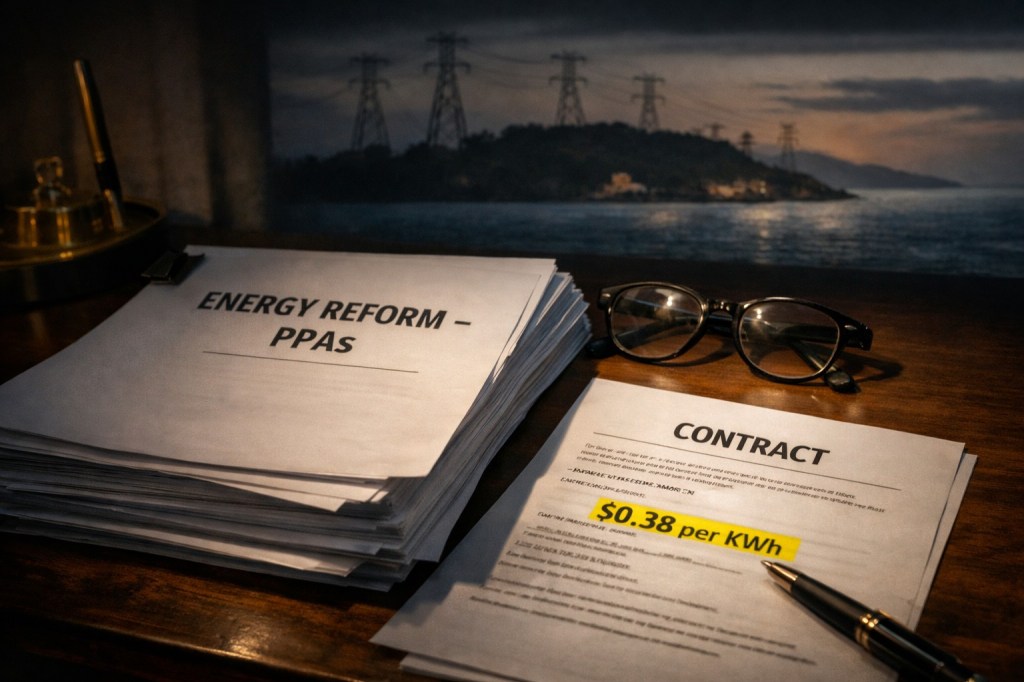
My Morning Paper 23 February 2026 – Energy Reform of Energy Lockdown?

This morning, while the country was watching the public back-and-forth between the Office of the Prime Minister and EyeWitness News over the status of the Grand Lucayan deal, another set of documents quietly demands attention — the energy reform agreements involving Bahamas Power and Light (BPL).

Now, I’m not saying anything is wrong. Not at all. I’m just asking questions. You see, sometimes the details tell you more than the headlines do.

According to reporting by The Nassau Guardian, the Davis administration released more than 3,000 pages of energy reform agreements outlining Power Purchase Agreements (PPAs) between BPL and several private companies. These companies will build, own, and operate solar and LNG generation facilities on Family Islands, and BPL will purchase electricity from them at contracted rates.

The government describes this as a “sweeping energy reform effort” designed to “right-size” BPL and modernize operations at a utility that has faced long-standing financial challenges.

Now that word — “right-size.” I wonder. What exactly does that mean?

Does it mean reducing BPL’s generation footprint?
Does it mean shifting risk to private operators?
Does it mean downsizing staff?
Or does it simply mean transferring generation assets into private hands while BPL becomes primarily a purchaser and distributor?

Because under these PPAs, BPL does not own the new plants. The private entities do. They build them. They operate them. They own them.

One of the disclosed agreements involves Andros Renewable Energy Co., which proposes:

  • Central Andros: 0.4 MW solar + 2 MW LNG
  • North Andros: 0.4 MW solar + 2 MW LNG
  • South Andros: 0.2 MW solar + 1.6 MW LNG

That totals 1 MW of solar and 5.6 MW of LNG.

Now, forgive me, but when something is described as renewable reform, and the overwhelming capacity is LNG — that’s still imported fossil fuel — one has to ask: is this diversification or substitution?

The LNG for these plants is to be supplied from a terminal at Clifton Pier, developed by Freeport Oil Company Ltd. in partnership with Shell North America.

Which raises another gentle question: how much of this structure represents true Bahamian ownership and control? If generation, fuel supply, and logistics are concentrated among a small group of external partners, where exactly does long-term energy sovereignty rest?

Let’s talk pricing.

BPL is to pay:

  • 25 cents per kWh (base rate)
  • 13 cents per kWh (LNG logistics)

Total: 38 cents per kWh.

Now, Deputy Director of Energy Verron Darville reportedly stated that it costs BPL more than that to currently generate power in Andros and that Family Island losses amount to roughly $50 million annually — subsidized by New Providence operations.

If that is accurate, then 38 cents could indeed represent a reduction in BPL’s internal generation cost.

But here’s the quiet part.

38 cents is what BPL pays the generator.

Consumers pay:

  • Generation
  • Transmission
  • Distribution
  • Administrative overhead
  • Fuel surcharge adjustments

So one might wonder: after BPL’s additional costs are layered in, what does the final consumer rate look like? The government says there is no change to the national pricing structure. But over 15- to 25-year PPA terms — which are typical for such agreements — how will adjustment clauses affect pricing?

Because some components of these contracts are:

  • Variable
  • Subject to annual adjustments
  • Not yet fully determined

And LNG pricing, as we know, is tied to global markets.

If LNG prices spike, who bears that risk?
Is it the generator?
Is it BPL?
Or is it the Bahamian ratepayer?

And if the logistics portion — 13 cents per kWh — is adjustable, what mechanisms cap that exposure?

Then there is the logistical dependency.

All LNG originates from Clifton Pier on New Providence and must be transported to Andros. That introduces:

  • Supply chain vulnerability
  • Weather exposure
  • Terminal performance risk

If there is disruption at the LNG terminal or in marine transport, what redundancy exists for Family Island supply?

Now, let’s be clear.

If these agreements are well structured:

  • Family Island losses could shrink.
  • Government subsidies could decline.
  • BPL’s balance sheet could stabilize.
  • Diesel dependence could decrease.
  • Emissions could improve relative to heavy fuel oil.

That is the optimistic case.

But if pricing assumptions are miscalculated, or escalation clauses are too generous, The Bahamas could be locked into long-term payment obligations — even if future solar and battery storage technologies become cheaper.

That is the structural risk inherent in long-term PPAs.

So perhaps the real issue isn’t whether 38 cents sounds high.

The real questions might be:

  • Is 38 cents materially lower than BPL’s fully loaded current production cost?
  • What is the exact PPA term length?
  • What are the escalation formulas?
  • Who bears fuel price volatility?
  • What are the termination or buyout clauses?
  • How much Bahamian equity participation exists?
  • What independent cost benchmarking was done before signing?

Because without full clarity on those points, it becomes difficult to determine whether this is transformative reform — or simply the relocation of financial risk from one column of the national ledger to another.

I’m not suggesting anything, you understand.

I’m just asking.

Because when a nation signs decades-long energy contracts, it’s not merely buying electricity.

It’s defining its economic structure, its fiscal exposure, and its sovereignty over a system every Bahamian household depends upon.

So, these are my thoughts on the Energy Reform initiative as proposed by the New Day Progressive Liberal Party (PLP) government and elevation of them.

END

My Morning Paper 20 Feb. 2026 – $39 Million for Harbourside… Because Plans Are Optional Now?

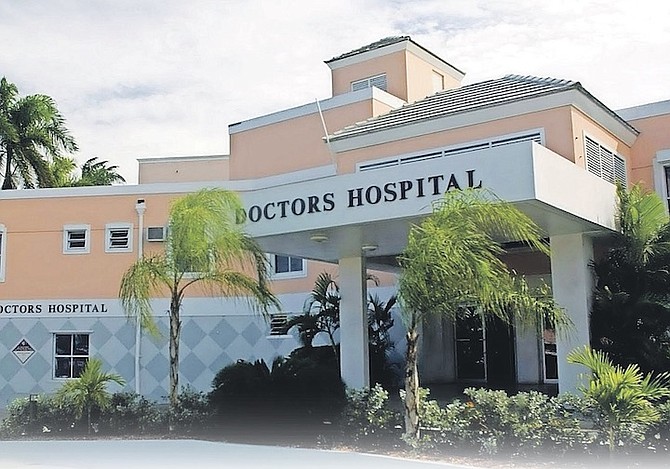
“The Government is paying $39m over a ten-year period to acquire the recently completed Harbourside in-patient facility on East Bay Street from Doctors Hospital…” – On 4th December 2025.

According to Michael Darville, Minister of Health and Wellness, the agreement is structured as a 10-year lease-to-own arrangement — 120 monthly payments — totalling $38.9 million. The facility is being acquired to temporarily house the maternity and legacy wards while long-delayed renovations are carried out at Princess Margaret Hospital (PMH), specifically the kitchen and related infrastructure.

Let’s be clear: those are the publicly stated facts.

Now let’s talk about the part that apparently lives in the forgotten archives of government memory.

The Renovations That Were Already Underway

Under the former Free National Movement’s (FNM’s) administration of Hubert Minnis, there were announced and initiated plans to renovate and modernize sections of PMH, including improvements to critical services. The maternity ward and broader hospital upgrades were part of a phased redevelopment plan intended to keep services centralized while improvements were made.

That was the plan.

Fast forward. Instead of accelerating and completing those renovations in sequence, we now find the government committing nearly $39 million to acquire a private facility to house services that were already supposed to be accommodated within the public hospital’s redevelopment framework.

So naturally, taxpayers might ask:

If the renovation plan had been followed, prioritized, and executed on schedule — would this $39 million expense have been necessary?

Lease-to-Own… or Pay Twice?

The Minister has framed the arrangement as fiscally responsible — spreading payments over 120 months to “ease the burden” on the Treasury [The People].

But here’s the arithmetic problem:

  • Renovations at PMH were already contemplated.
  • Temporary relocation becomes necessary only when renovation sequencing is delayed or mismanaged.
  • Now taxpayers are funding:
    1. The PMH renovations (still ongoing),
    2. A $39m acquisition of a private facility to temporarily house wards,
    3. AND a proposed $267 million specialty hospital, reportedly to be built in western New Providence — largely focused on maternal and specialized women and children care.

At some point, this stops looking like strategic healthcare planning and starts looking like a very expensive game of musical chairs.

The $267 Million Question

While committing to the Harbourside acquisition, the government is also advancing plans for a $267 million specialty hospital project in western New Providence — described as being heavily maternity-focused.

So, let’s recap:

  • We are temporarily moving maternity services.
  • We are buying a facility to house maternity services.
  • We are planning to build a new hospital centred around maternity services.

One could be forgiven for wondering whether there is a unified master plan — or whether each announcement is simply a reaction to the last unfinished announcement.

Project Management, Bahamian Edition

If the prior renovation plan had been executed efficiently and without interruption, there is a legitimate argument that the additional $39 million outlay may have been avoided — or at least reduced.

Instead, the public is now paying for:

  • Delays,
  • Parallel infrastructure,
  • And a long-term financial commitment that will stretch a decade.

All while being told this is the “responsible” solution.

One must admire the confidence.

Because in any other setting — whether in architecture, development, or private enterprise — abandoning an existing renovation plan, incurring millions in additional acquisition costs, and layering on a $267 million capital project would trigger some very serious questions about coordination, sequencing, and oversight.

I would genuinely love to meet the person doing the project management on this. Not to criticize — just to understand the flow chart. Because from the outside looking in, it appears the only thing spreading faster than hospital services across New Providence… is the invoice.

It is my opinion that healthcare infrastructure requires continuity, sequencing, and disciplined execution. When administrations change, patients should not become casualties of political resets.

The public deserves transparency on:

  • What specific PMH renovation plans were inherited,
  • What timelines were altered or delayed,
  • Why the Harbourside acquisition became necessary,
  • And how this integrates with the proposed $267m specialty hospital.

Because $39 million is not pocket change.

And if proper follow-through on existing plans could have prevented it, then taxpayers are not just funding healthcare — they are funding preventable inefficiency.

The people of The Bahamas deserve answers.

The people of The Bahamas deserve better.

The Progressive Liberal Party (PLP) fails for one reason; it is their nature.

END
My Morning Paper- 19 February 2026 – Cancelled, Contradicted, and Condescending

For a government that frequently asks the Bahamian people to “trust us,” the record tells a far more complicated story — one filled with reversals, cancellations, and now, contradictions from within its own ranks.

When the Progressive Liberal Party (PLP) returned to office in September 2021 under Prime Minister Philip Davis, one of its early decisions was to halt the loan arrangement put in place under the Minnis administration for renovations to Princess Margaret Hospital (PMH). The Davis administration stated at the time that it was reviewing and restructuring the financing arrangements. It is also a matter of record that funds associated with that loan facility were returned.

Fast forward to today: major redevelopment works at PMH have not been completed, and the facility continues to face well-documented infrastructural challenges. While the government has announced phased redevelopment plans and alternative financing strategies, the reality is that the comprehensive transformation initially anticipated has yet to materialize. For a hospital long described as being in urgent need of modernization, delay carries consequences.

Similarly, in Grand Bahama, the Davis administration cancelled the prior agreement involving the sale of the Grand Lucayan Resort. The PLP argued the deal negotiated under the Minnis administration was not in the best interest of the Bahamian people. That was a policy decision within their authority.

However, more than four years later, a finalized and executed sale that brings sustained economic revitalization to Grand Bahama has not been completed. Announcements have been made. Negotiations have been referenced. But a transformative, closed deal delivering clear economic relief to the island remains outstanding. The criticism here is not about the right to cancel a deal — it is about the obligation to replace it with something demonstrably better within a reasonable timeframe.

Then there is fuel hedging at Bahamas Power and Light (BPL).

Public reporting from The Nassau Guardian documented a dispute between the former BPL CEO, Whitney Heastie, and Energy Minister JoBeth Coleby-Davis over whether the hedging program implemented under the Minnis administration produced savings.

Heastie’s October 18, 2021, letter to then-Minister Alfred Sears asserted that the hedging strategy had already saved approximately $30 million over 13 months and projected up to $55 million in savings by January 2022. He further stated that because fuel costs are passed directly to consumers, those savings translated into reduced fuel charges.

Minister Coleby-Davis later publicly disputed that characterization, stating that due to the operational state of the Clifton plant and fuel mix realities, there were “no savings” in practical terms. The Davis administration also acknowledged inheriting approximately $100 million in fuel-related debt.

The controversy deepened when the government declined to execute additional hedge trades that BPL’s hedging committee and board had reportedly recommended in order to lock in lower fuel prices. Both Minister Sears and Prime Minister Davis publicly stated they were not advised that those trades needed to be executed — a claim the Opposition challenged.

Here lies the broader issue: when a former CEO documents savings, an Energy Minister says there were none, and the Prime Minister states he was never advised — yet the public is later told to simply trust that a new hedging strategy will be better — confidence becomes strained.

If there were no savings, why did BPL’s own documentation project millions in cost reductions?
If there were savings, why were subsequent trades not executed?
If Cabinet was not properly briefed, what does that say about internal governance?
And if it was briefed, who is contradicting whom?

The Prime Minister cannot reasonably ask the Bahamian people to “trust the process” while appearing unaware of what his ministers were being advised — or while his ministers publicly contradict documented positions from state executives.

Equally troubling is the tone sometimes adopted toward critics. When members of the public question inconsistencies, they are occasionally met with condescension — as though they simply “do not understand.” But the information now being used to defend government policy was not always proactively shared with the public at the time decisions were made. You cannot withhold clarity, then criticize citizens for lacking it.

Leadership requires coherence. It requires transparency. And above all, it requires that a Cabinet speak with one factual voice.

As a general election approaches, the Bahamian people will weigh not just promises of a new hedging program, or renewed hospital plans, or future deals for Grand Bahama — but the track record of cancelled agreements, delayed replacements, and internal contradictions.

Trust is not demanded.
It is earned.

The Bahamian people deserve better and the Progressive Liberal Party (PLP) fails for one reason; it is their nature.

End

My Morning Paper- 18 February 2026 – While Prime Minister Davis Askes for Us to Trust Him

If the Bahamian people are being asked to trust their Prime Minister, then the very least they deserve is clarity — and consistency.

Let’s start with the timeline and the facts.

In May 2024, Opposition Leader Michael Pintard criticised the Davis administration over its handling of a reported $500 million loan with the Inter-American Development Bank and the broader status of Bahamas Power and Light (BPL). At that time, Energy Minister Jobeth Coleby-Davis responded “cutely” that she would not entertain questions until after the Free National Movement convention — and only if Pintard remained leader.

The convention concluded on June 1, 2024, and Michael Pintard was returned as leader. Yet substantive public answers on key aspects of the BPL restructuring — particularly surrounding the transmission and distribution (T&D) agreement — remained limited or just simply unanswered.

Then came the controversy reported by The Nassau Guardian under the headline “PM wrongly claims BPL deal public.”

According to that report, Prime Minister Philip Davis stated that all contractual arrangements related to energy reform had been tabled in Parliament and were therefore public. He went further, suggesting critics were “lazy” and wanted to be “spoon fed.”

However, the specific agreement in question — the 25-year T&D arrangement involving U.S.-based Pike Corporation, operating locally through Island Grid Solutions — had not, at the time of the report, been tabled in Parliament. The media and opposition had repeatedly requested its disclosure.

The Prime Minister had previously informed Parliament that his government facilitated the creation of Bahamas Grid Company, in which BPL holds a 40 percent stake. But the full contractual details of the Pike arrangement — particularly the management and upgrade terms for New Providence’s grid — remained unclear.

Now here is where the issue moves beyond policy and into trust.

If the Prime Minister genuinely believed the documents were tabled when they were not, that raises serious internal governance questions. Major energy reform agreements do not materialize out of thin air. They are negotiated, reviewed, approved at Cabinet level, and processed through official channels. Such documents would ordinarily cross the Prime Minister’s desk.

If they did not — that suggests a troubling disconnect.

If they did — then the public statement was inaccurate.

Neither scenario inspires confidence.

It becomes even more concerning when the response to legitimate questions is not clarification, but condescension. Accusing the press or the opposition of laziness for not reading documents that were never formally tabled creates the appearance of deflection rather than leadership.

Trust in public office rests on three pillars:

Transparency

Competence

Accountability

When a Prime Minister appears unaware of whether key national agreements have been made public, and simultaneously rebukes others for not accessing them, it undermines all three.

This is not a trivial matter. Energy reform affects every Bahamian household and business. The structure of BPL, the terms of long-term grid management, and multi-hundred-million-dollar financing arrangements shape electricity costs, fiscal exposure, and national infrastructure for decades.

The Bahamian people are being asked to trust that everything is under control.

But trust is not demanded — it is earned.

If the government expects confidence from “right-thinking Bahamians”, then it must demonstrate that the Prime Minister is fully briefed on major Cabinet decisions, that public disclosures are accurate, and that critics are answered with facts — not frustration.

Because at the end of the day, the question is simple:

If there is confusion at the top about what has or has not been made public, how can the public be expected to feel secure about what else may be happening behind closed doors?

Leadership is not about being “spoon-fed.”

It is about knowing — and owning — what happens on your watch.

And yes, Prime Minister, it is still a matter of trust.

The Progressive Liberal Party (PLP) fails for one reason; it is their nature and Tge Bahamas deserves much better.

END

My Morning Paper- 17 February 2026 – Rescued From What, Exactly?

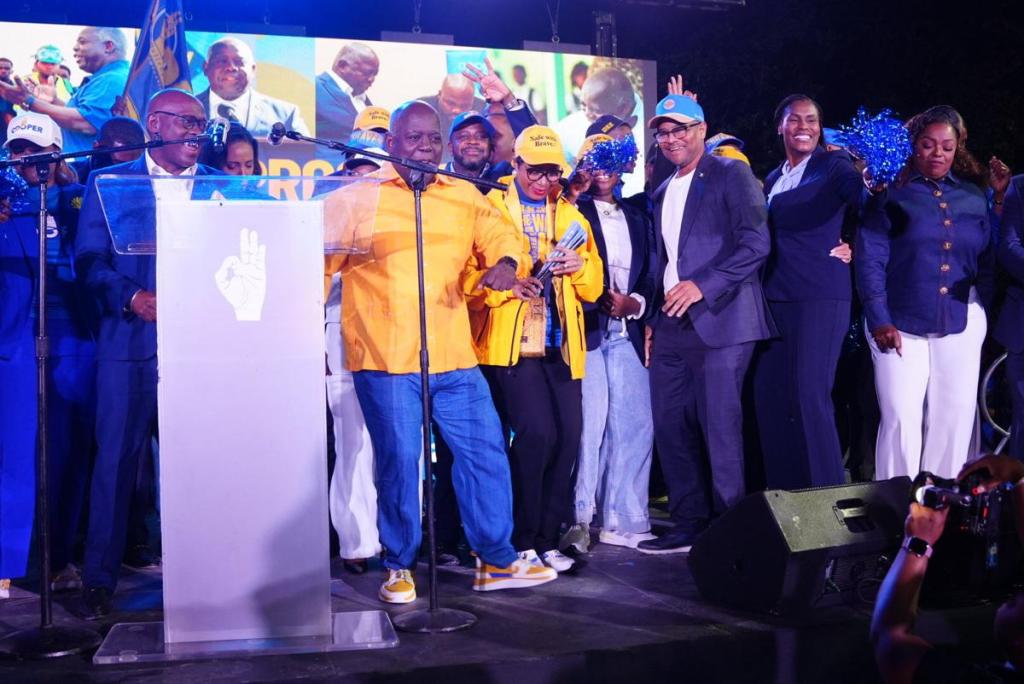
Last night the Progressive Liberal Party officially launched its campaign for the 2026 general election — though one could argue they have never truly stopped campaigning. The event, staged at Baha Mar, felt less like the unveiling of a serious national agenda and more like a well-funded theme party without a theme.

Front and centre was Prime Minister Philip “Brave” Davis, once again making the now-familiar claim that when the PLP came to office in September 2021, they had to “rescue the country from collapse and put it on the road to recovery.”

It is a dramatic line. It is cinematic. It is also highly debatable.

The “Rescue” Narrative

The Davis administration took office at a time when The Bahamas — like the rest of the world — was emerging from the economic shock of COVID-19. Borders had reopened in late 2020. Tourism numbers were rebounding sharply throughout 2021. Major resorts were reopening. Global recovery trends were already underway.

To hear the Prime Minister tell it, however, one might imagine the country was minutes away from being sold for scrap metal.

The question that continues to go unanswered is simple:

What specific emergency fiscal or structural interventions did the Davis administration implement immediately upon taking office that constitute a “rescue”?

If the country was on the brink of collapse, where was the collapse in measurable terms? Tourism was rebounding. GDP growth returned in 2021 and accelerated in 2022. Revenue collections rose largely in tandem with global recovery patterns. Was this divine intervention — or simply global normalization?

The Greatest Hits: VAT, Minimum Wage, and Agreements

According to reporting in The Nassau Guardian, the Prime Minister highlighted several “achievements”:

  • Raising the national minimum wage
  • Signing approximately 60 industrial agreements with trade unions
  • Reducing VAT from 12% to 10%

Let’s examine them.

VAT: The Gift That Keeps on Giving [Him Talking Points]

Yes, VAT was reduced from 12% to 10% in January 2022. That is fact.

What is rarely emphasized is that VAT has been broadened in scope over time, and consumers continue to experience high prices driven by global inflation, shipping costs, and domestic markups. A 2% reduction sounds significant on paper. In the grocery aisle, it often feels symbolic.

Moreover, while certain breadbasket items remain VAT-exempt, questions persist about the extension of VAT to items and services that disproportionately affect working families. The relief narrative does not always align with lived experience.

If this VAT reduction was the economic masterstroke that “rescued” the nation, why do so many Bahamians still report struggling with cost-of-living pressures?

Two percent off a taxed item does not equal economic transformation.

Minimum Wage Increase

The national minimum wage increased from $210 to $260 per week in July 2022 — the first increase in several years.

That is measurable progress.

But here again is the inconvenient question:
Has that increase kept pace with inflation, rent hikes, electricity bills, food prices, and insurance costs?

A wage increase without structural cost-of-living reforms risks becoming political decoration rather than economic liberation.

Industrial Agreements

Signing dozens of industrial agreements is commendable — if those agreements translate into real productivity gains, fiscal sustainability, and improved services.

But agreements signed are not reforms completed. Contracts negotiated are not economic diversification achieved.

The average Bahamian wants to know:
Where is the structural transformation?
Where is the diversification beyond tourism and financial services?
Where is the debt trajectory heading?

Debt, Deficit, and the Fiscal Cliff

If the PLP rescued the country from a fiscal cliff, then transparency demands clear metrics:

  • What is the current national debt trajectory?
  • What is the deficit position relative to GDP?
  • How much of the revenue rebound is organic growth versus post-pandemic normalization?

These are not partisan questions. They are national ones.

The public deserves to see not just celebratory headlines but audited numbers, medium-term fiscal projections, and debt-to-GDP sustainability plans.

Because if you claim to have saved the house from burning down, it is reasonable for the homeowner to ask to see the fire report.

The Second Term Question

Prime Minister Davis is now asking for a second term “to continue the progress.”

But progress toward what?

  • Has crime meaningfully declined?
  • Has energy reform lowered electricity costs?
  • Has healthcare accessibility improved in measurable, system-wide ways?
  • Has economic inequality narrowed?

Campaign launches are meant to inspire. Instead, this one raised more questions than confidence.

If the first term was about “rescue,” the second must logically be about transformation. Yet the rhetoric sounds suspiciously like a replay of 2021 — same storyline, new backdrop.

The Bahamian electorate is not allergic to progress. It is allergic to exaggeration.

If there was a rescue, show the receipts.
If there was recovery, show who recovered.
If there is progress, show who progressed.

Because a campaign launch at a luxury resort, wrapped in applause and carefully selected statistics, does not automatically equal national advancement.

And as 2026 approaches, voters may begin asking a dangerous question for any incumbent:

If this is what rescue looks like, what exactly were we saved from?

The Progressive Liberal Party (PLP) government fails for one reason; it is their nature.

END
My Morning Paper – 14th February 2026 – Apparently, It’s Not Personal… After You Call Him a Jackass

It is one thing to disagree on public policy. It is another thing entirely to light the personal match, throw it, and then complain about the smoke.

When Dr. Duane Sands—former Health Minister under the Free National Movement (FNM)—described the Davis administration’s proposal for a new specialty hospital as a “dumb idea,” he did not do so in a vacuum. His stated position was straightforward: the country’s primary public hospital, the Princess Margaret Hospital (PMH), still faces longstanding infrastructure, maintenance, staffing, and equipment challenges. In that context, he argued that prioritizing a brand-new specialty facility over completing upgrades and expansions to the existing general hospital was, in his view, misguided.

You can disagree with that reasoning. What you cannot fairly say is that there was no reasoning.

Enter Fred Mitchell, Chairman of the Progressive Liberal Party (PLP), who responded not by dismantling the policy argument point by point, but by launching into Dr. Sands’ past—referencing his resignation in 2020 after violating COVID-19 emergency orders, his opposition to aspects of National Health Insurance (NHI), and alleging broader “failure” in health care.

Let’s fact-check that terrain.

Yes, Dr. Sands resigned in May 2020 after admitting he assisted U.S. citizens who arrived in The Bahamas during COVID-19 restrictions, contrary to emergency orders. That is a matter of public record.  The funny thing about this is that it was Philip “Brave” Davis that stood up in Parliament during the pandemic and said that we have “friends” that could assist us with getting the vaccine and this is what Dr. Sands did and was fired for, but this is how life is; right?

Yes, he has been critical of how NHI was structured and funded, though NHI itself was initiated under a previous PLP administration and expanded in phases thereafter.

But here is the pivot: when you begin by referencing someone’s “personal conduct,” calling them names, and listing past controversies, you have already made it personal. To then issue a release saying, “This has nothing to do with me and you, personally. This is about public policy,” rings hollow. If it were strictly about policy, the rebuttal would have focused on hospital capacity data, capital budgets, staffing ratios, and timelines—not “jackass” and character attacks.

Now to the substance.

The FNM administration (2017–2021), with Dr. Sands as Health Minister for part of that term, advanced renovation works at PMH, including infrastructure upgrades and planning for expanded services. Not all projects were completed before the 2021 election. That is also a fact.

Since the PLP returned to office in 2021 under Philip Davis, PMH has continued to experience well-documented challenges: infrastructure strain, equipment shortages, industrial disputes with nurses, and complaints about conditions in Accident & Emergency. If the government’s position is that the FNM left the hospital in disrepair, the obvious follow-up question is: what has been completed in the four-plus years since? Capital allocations were made in successive budgets. If funds were reallocated or projects delayed, that is a matter of governance—not inheritance.

You cannot simultaneously argue:

  1. The hospital was in crisis when we came to office, and
  2. We have not yet meaningfully completed the core renovations, and
  3. Our top priority is building a brand-new specialty hospital.

That is not a personal attack. That is a sequencing question.

Then there is the demographic argument. Mr. Mitchell has publicly referenced declining birth rates and the need to supplement the workforce through immigration due to population trends. If the birth rate is declining—as demographic data in The Bahamas has shown in recent years—then the logical policy debate becomes: should scarce capital funds prioritize a women’s and children’s specialty hospital, or the strengthening and expansion of a comprehensive general hospital that serves the entire population, including a growing elderly demographic?

A specialty hospital for women and children is not inherently a bad idea. The question is whether it is the right idea right now.

And that brings us back to tone.

If Dr. Sands says the idea is “dumb,” you can rebut him with numbers, timelines, and fiscal projections. What weakens the government’s position is abandoning policy argument in favour of personal invective—then insisting it is not personal.

When you throw the first punch and then complain about getting hit back, you do not look principled. You look thin-skinned.

The Bahamian people deserve a serious discussion about:

The status of renovations at Princess Margaret Hospital

The funding and sustainability of National Health Insurance

Staffing levels and industrial agreements

Capital priorities in a constrained fiscal environment

They do not deserve political theatre disguised as policy debate.

If this is truly about facts, then let’s have facts: What renovations remain incomplete? What funds were allocated, spent, or returned? What is the full capital cost of the proposed specialty hospital? How will it be staffed, and how will it be funded without undermining the general hospital?

Those are not personal questions.

They are governance questions.

The Progressive Liberal Party (PLP) fails for one reason; it is their nature and The Bahamas deserves much better.

END

My Morning Paper- 12 February 2026 – The Dumb Idea and the Reasoning Behind it

Yesterday the Chairman of the New Day PLP came out swinging like he was in the blue corner at the Andre Rodgers Stadium, gloves laced up, ready to defend the government’s shiny new specialty hospital.

And all because Dr. Duane Sands called the project a “dumb idea.”

Now, plenty people get stuck on the phrase “dumb idea,” but what they seem allergic to discussing is the reasoning behind it. Because sometimes it’s not the volume of the insult — it’s the logic behind it that does the real damage.

According to The Nassau Guardian, Dr. Sands questioned the wisdom of borrowing $195 million from the Chinese EXIM Bank to build a 200-bed specialty women’s and children’s hospital — especially while Princess Margaret Hospital is gasping for air, nurses are staging sick-outs over unpaid overtime, and vendors are threatening to withhold supplies because they are not being paid.

But instead of answering the very real question — why build new when the old one falling down? — the Chairman of the PLP decided to light a rhetorical match and throw it in the dry bush.

He thundered.
He scolded.
He declared Dr. Sands “Dr. No.”

But here’s the thing, my Bahamian brothers and sisters: passion is not policy. Volume is not vision.

Because let’s rewind the tape.

When the PLP came to office, there was an ongoing plan to renovate PMH. Not talk. Not a press conference. Not a concept drawing. An actual, funded renovation plan to upgrade Princess Margaret Hospital — including improvements that would directly impact women and children.

And what happened?

They stopped it.
They reviewed it.
They cancelled it.
They sent the money back.

Sent. The. Money. Back.

Now fast forward a few years and the same administration wants to borrow $195 million for a brand-new specialty hospital — to solve problems that the PMH renovations were already designed to address and would have already solved, had they been carried out.

So, help me understand the math.

You cancel renovations to the existing hospital.
Conditions worsen.
Nurses protest.
Vendors complain.
Patients suffer delays.

And the solution is… borrow more money for a brand-new specialty hospital while the old one still struggling?

That isn’t vision. That’s déjà vu with interest payments.

Chairman Mitchell says PMH is “bursting at the seams.” Sir… it was bursting when you got there. And instead of reinforcing the seams, you pulled out the thread and now blaming the tailor.

You cannot stop renovations, send back funds, allow infrastructure strain to intensify, and then act shocked — shocked! — that people are questioning your priorities.

And let’s talk about priorities.

Healthcare workers are publicly saying they are owed overtime since June 2025. Vendors allegedly waiting on payments. Supplies reportedly delayed. And in the middle of all that, the government is signing off on a nine-figure foreign loan.

Bahamian people not asking for theatrics, they are asking for sequencing.

Fix PMH.
Complete what was started.
Stabilize the system.
Then expand.

Instead, what we getting is political fireworks and historical name-calling.

Calling somebody “Dr. No” might make for a catchy headline, but it does not answer why a government would halt an active renovation plan — only to later borrow more money to fix the very same issues they allowed to fester.

Chairman, where was this “compassion” when the renovation contracts were paused?
Where was this righteous indignation when the money was returned?
Where was this “nothing dumb about that” energy when PMH still leaking, overcrowded, and understaffed?

Because from where the public sitting, this doesn’t look like strategic expansion.

It looks like stopping a roof repair to announce a penthouse.

And the Bahamian people deserve better than political ego dressed up as healthcare reform.

If the goal was always to improve care for women and children, then completing the PMH renovations would have been the fastest, most cost-effective path forward. Instead, we now facing borrowed millions, geopolitical side-eyes, and a main hospital still under pressure.

Before you blame critics for pointing out cracks, maybe explain why you paused the cement truck in the first place.

Because in Bahamian politics, memory short — but hospital wait times long.

And the people watching.

The Progressive Liberal Party (PLP) government fails for one reason; it is their nature.

END
My Morning Paper- 10 February 2026 – Confusion and Pettiness; The Way of the PLP

Fred Mitchell—Chairman of the New Day Progressive Liberal Party—recently warned Bahamians to brace themselves for an increase in “nasty politics” as we head toward 2026.

Which is adorable.

Because that warning is a bit like a professional arsonist holding a press conference to caution the public about an uptick in fires. Sir… people are mainly watching your hands.

Now enter Prime Minister Philip “Daddy Brave” Davis, standing at PLP ratification night, declaring—according to The Nassau Guardian—that “the country cannot afford a return to confusion” or the “petty politics” of the Free National Movement.

Confusion. Pettiness. Strong words from a man whose administration have turned “policy review” into a national suspense series.

According to the Prime Minister, this election is about:

  • Moving forward versus being dragged backward
  • Expanding opportunity versus shutting it down
  • Respecting working people
  • Progress versus pettiness

Which all sounds very inspiring… until you ask the dangerous follow-up question:

Progress where?

Because “forward” is not a direction—it’s a claim. And claims require receipts.

The Prime Minister urges PLP’s not to relax, not to assume victory, to knock on doors, to stay humble, to listen more than they talk, and to serve more than they posture.

Which is excellent advice—especially for an administration that has spent four-plus years perfecting the art of posture.

Then comes the pièce de résistance:
Michael Pintard, Leader of the Opposition, is branded a “petty man.”
And we’re told—quite solemnly—that “petty men do not build nations.”

Fair enough.

But here’s where the monologue turns into a mirror.

If pettiness is truly the enemy of progress, then surely the Prime Minister would first want to address the pettiness within his own government—because that’s where the policies actually stop, stall, or vanish.

Let’s start with Grand Bahama.

When the PLP came to office in 2021, it reviewed and ultimately terminated the existing Grand Lucayan resort sale arrangement negotiated under the previous administration. That is not opinion—that is public record.

What followed was not clarity, but limbo.

Years later, Grand Bahamians are still waiting for a definitive sale, still hearing conflicting timelines, still watching press conferences substitute for bulldozers. Whether the original deal was perfect is debatable—but cancelling it without a ready, executed alternative has had real consequences. That’s not “confusion” returning. That’s confusion being managed.

Now let’s talk about Princess Margaret Hospital.

The PLP government halted the ongoing PMH renovation project and returned loan funds associated with it—again, not speculation, but acknowledged by officials—while promising a brand-new hospital instead.

That new hospital has since been promoted internationally, discussed frequently, and completed… nowhere.

In the meantime, renovations stopped, timelines evaporated, and Bahamians were told—once again—to trust that something better is coming soon.

Soon has become the most overworked word in Bahamian politics.

So when Prime Minister Davis now asks “right-thinking Bahamians” to trust him again, because the alternative is “pettiness” and “confusion,” one can’t help but notice the irony.

Because trust is not earned by speeches.
Trust is not sustained by slogans.
And trust is certainly not built by cancelling projects, returning funds, restarting processes, and then blaming the opposition for the mess left behind.

Which brings us to the final question—the one voters keep asking quietly, even when rallies are loud:

If this is progress…
why does it feel like we keep starting over?

And if the Prime Minister’s argument is simply “Trust me, because the other guy is petty”—well, that’s not leadership.

That’s fear marketing.

And as the old saying goes:
Doing the same thing repeatedly, expecting a different result… is not progress.

It’s just insanity—with better lighting and a campaign soundtrack.

The Progressive Liberal Party (PLP) government fails for one reason; it is their nature.

END